Practical formulation articles
Read through the problems that stall a formula on the bench: which grade to buy, how the system holds, and what to check when a cream splits, an oil turns, or a water phase clouds.
Explore by topic
Explore by topicWhat formulators are solving now
Newest notes on carrier oils, essential oils and dry extracts, then preservation, texture and emulsifiers.
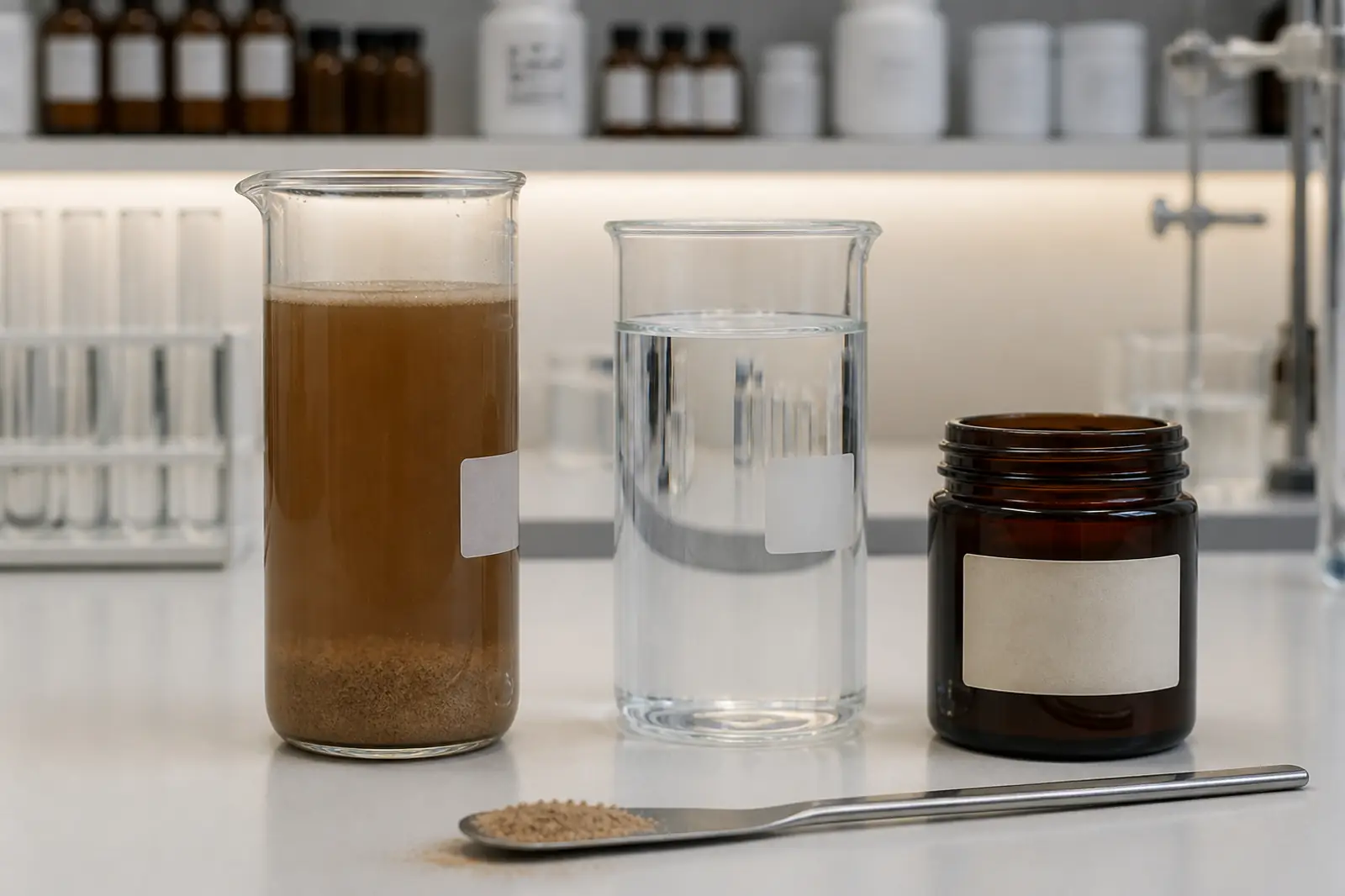 Hyaluronic acid clumps and fish-eyes: fix hydration, not the labelRead →
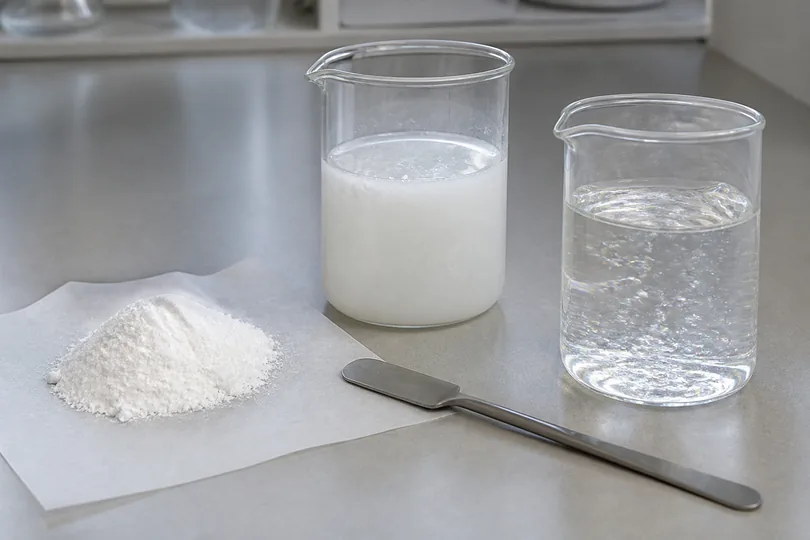 MAP vitamin C serum turns cloudy or precipitates: diagnose the systemRead →
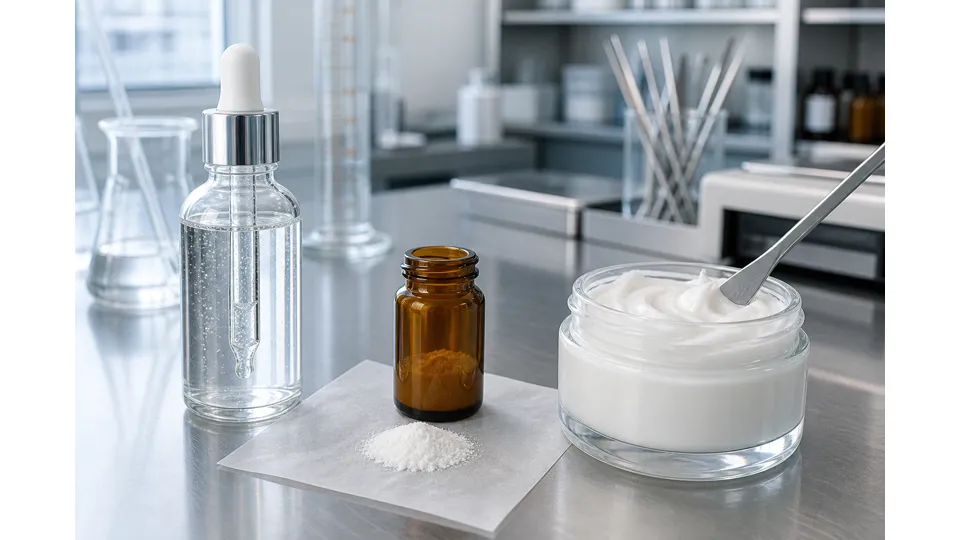 Cream splits after fragrance or essential oil: diagnose the cool-downRead →
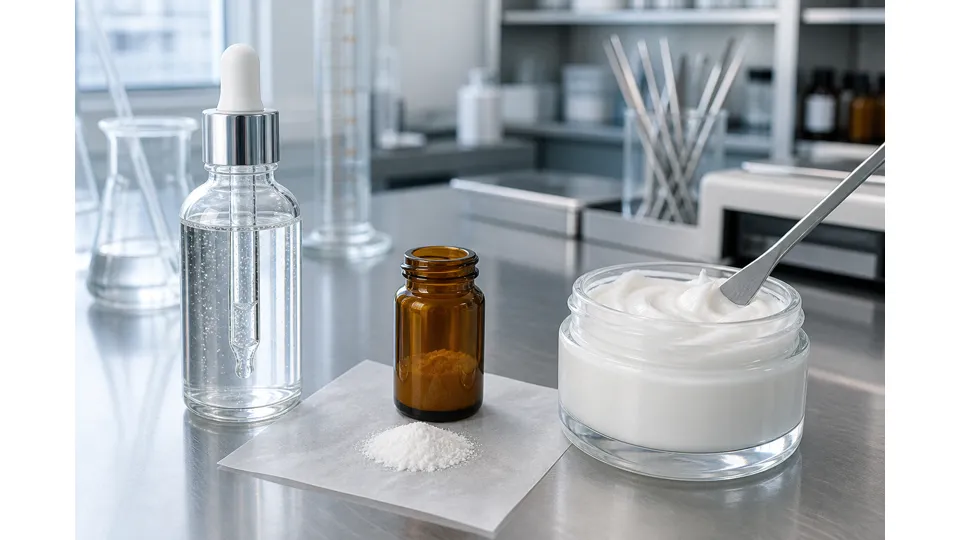 A botanical extract can change preservation of a passing baseRead →
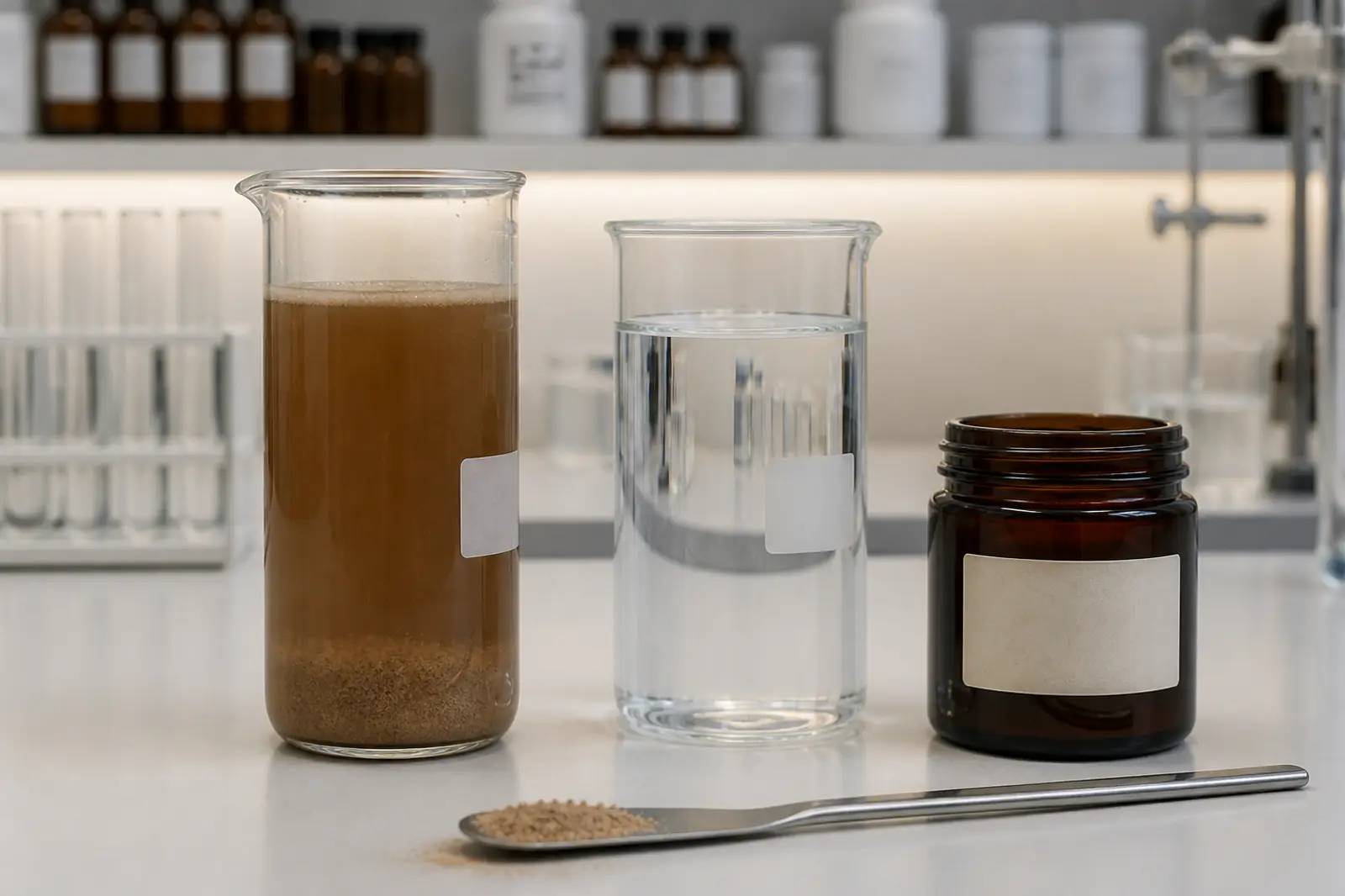 Carbomer gel stays thin after neutralization: diagnose the batchRead →
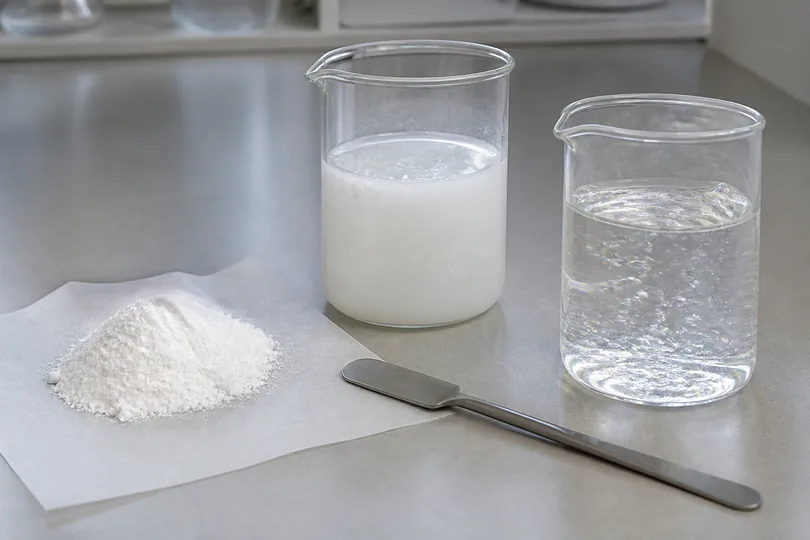 Niacinamide in an acidic formula: diagnose the process, not the mythRead →
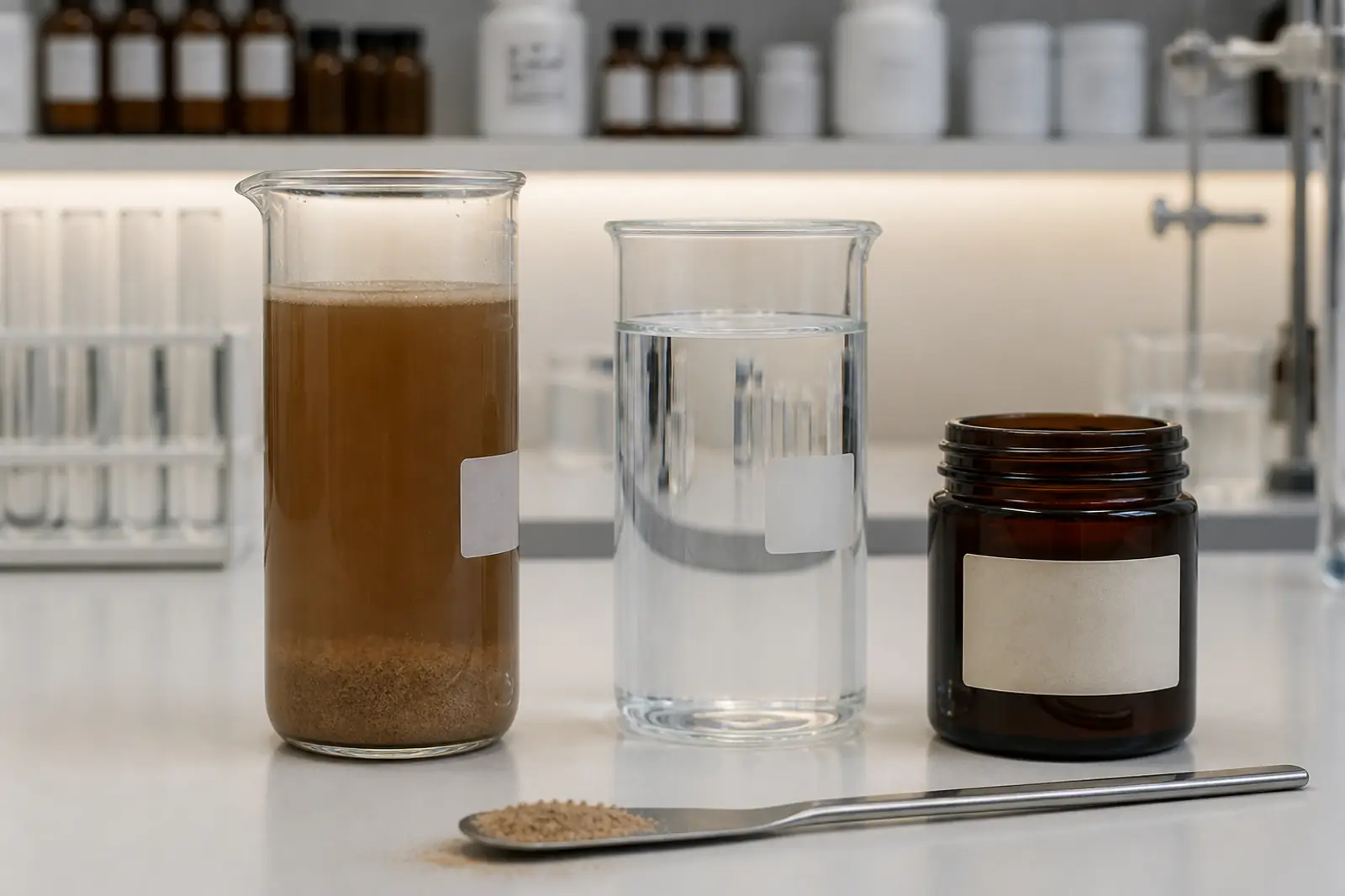 A glycolic botanical extract is not glycolic acidRead →
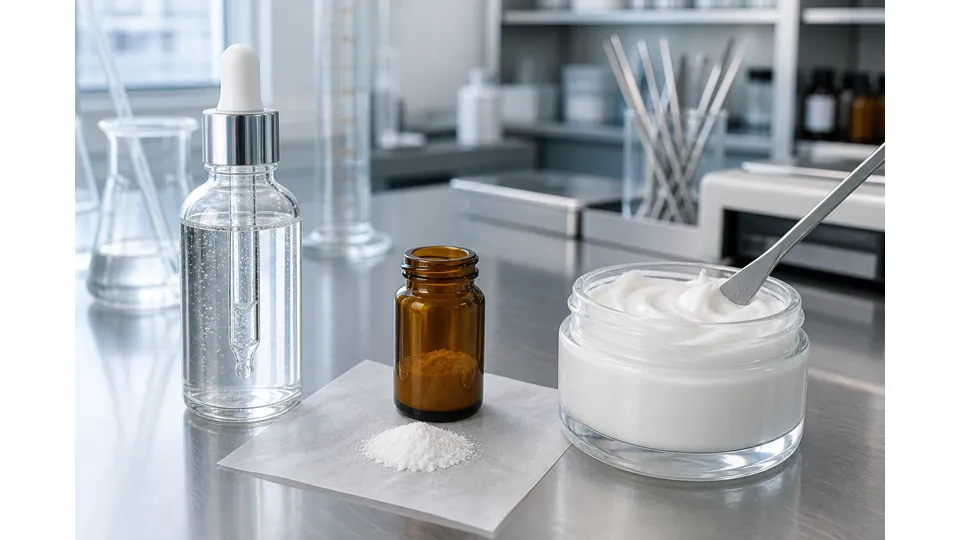 Ectoin powder is not a finished barrier serumRead →
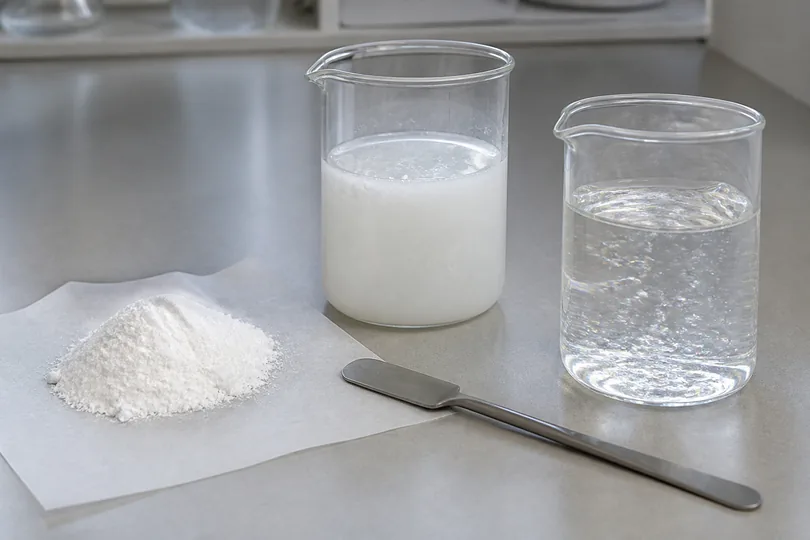 10% surfactant blend is not 10% active matterRead →
Formulation diagnostics
Formulation diagnosticsMAP vitamin C precipitated? Diagnose solubility, pH and the whole serum
Why magnesium ascorbyl phosphate can cloud or precipitate in a serum and what to check before adding more solvent.
Formulation diagnosticsHyaluronic acid made fish-eyes? The hydration process is the first suspect
A practical diagnosis for hyaluronic acid fish-eyes, surface gel shells and uneven hydration.
Formulation diagnosticsNiacinamide plus acid is a formulation diagnosis, not an automatic ban
A formulation diagnostic for niacinamide in acidic systems: supplier guidance, finished pH, heat history and process order.
Formulation diagnosticsYour carbomer gel stayed thin — more polymer is not the first fix
Diagnose carbomer dispersion, hydration, neutralization order and electrolyte load before adding more polymer.
Formulation diagnosticsYour preserved base passed before the botanical extract — now it is a changed formula
Why a clear normal-looking formula still needs preservation validation after a meaningful botanical addition.
Formulation diagnosticsYour surfactant percentage is not your active surfactant matter
A cleanser can contain 10% supplied surfactants without containing 10% active surfactant matter. Read supplier actives before comparing formulas or using an ASM calculator.
Formulation diagnosticsBuying ectoin does not finish the barrier serum
Ectoin can be a useful cosmetic active, but a barrier-serum brief still needs a compatible base, preservation, pH control and finished-product testing.
 Formulation diagnostics
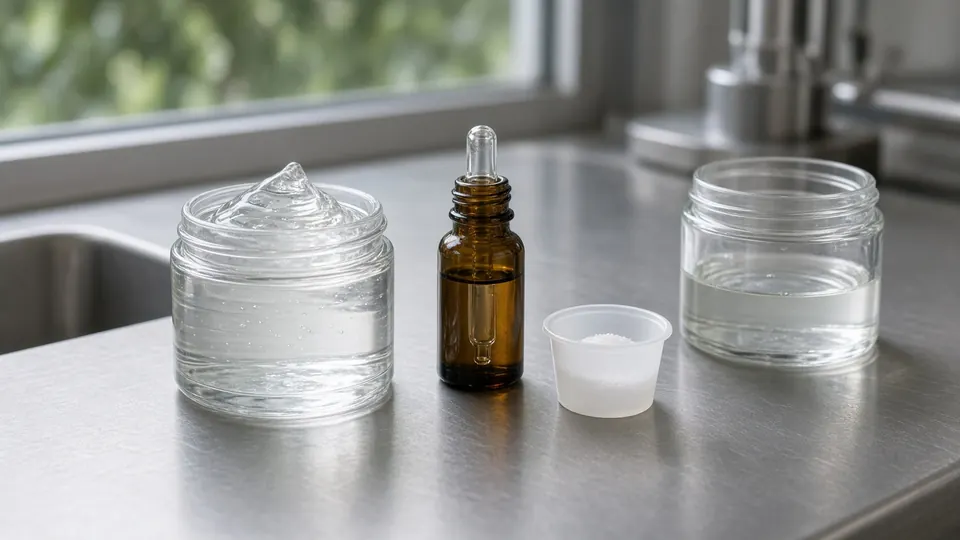
If the carbomer already stood, a PDRN crash is a salt event, not a missing polymer
The acrylate gel already peaked. After the PDRN lot, it poured like water. How a formulator times a standing-gel crash against two lot files — not a PDRN+HA cloud and not a slurry that never gelled.
 Formulation diagnostics
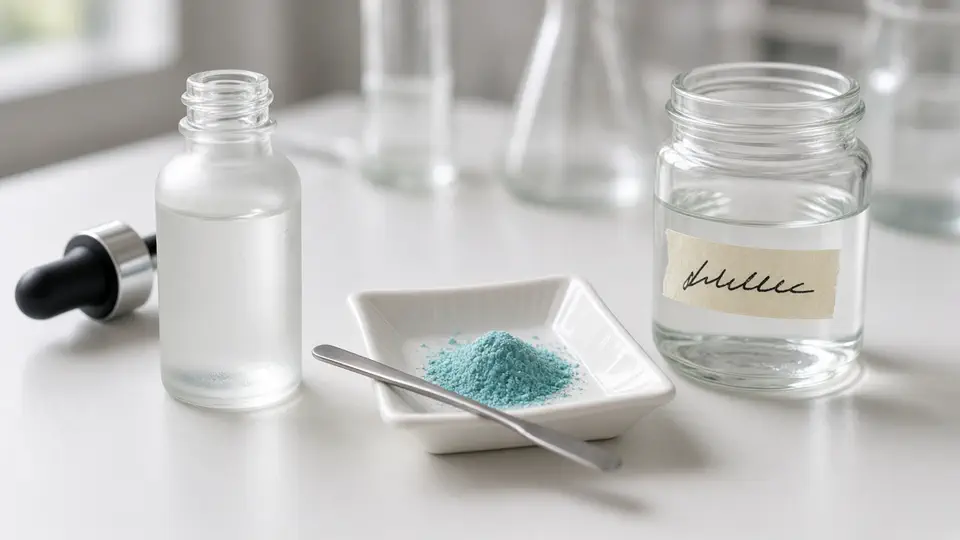
A retail dropper is a black box — it is not your water phase
Adding GHK-Cu or SNAP-8 into a bought multi-peptide serum changes preservation, pH, salts and pack assumptions you cannot reconstruct from the INCI. Cosmetic QC, not a viscosity rant.
 Formulation diagnostics
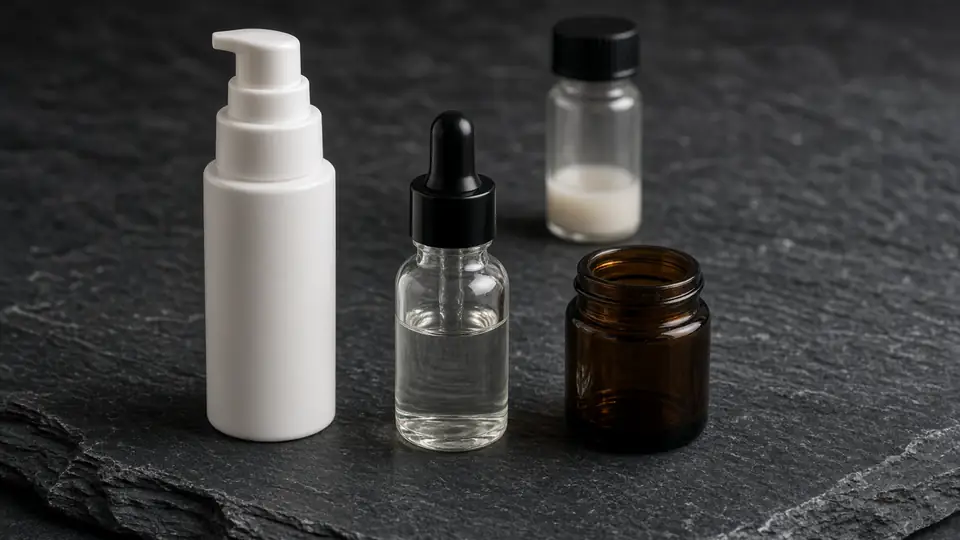
A darker bottle can hide a formula that was never validated
Airless pumps and light-blocking packs reduce air and light exchange. They do not prove preservation, pH, compatibility, rheology, dose, or a filled-product protocol.
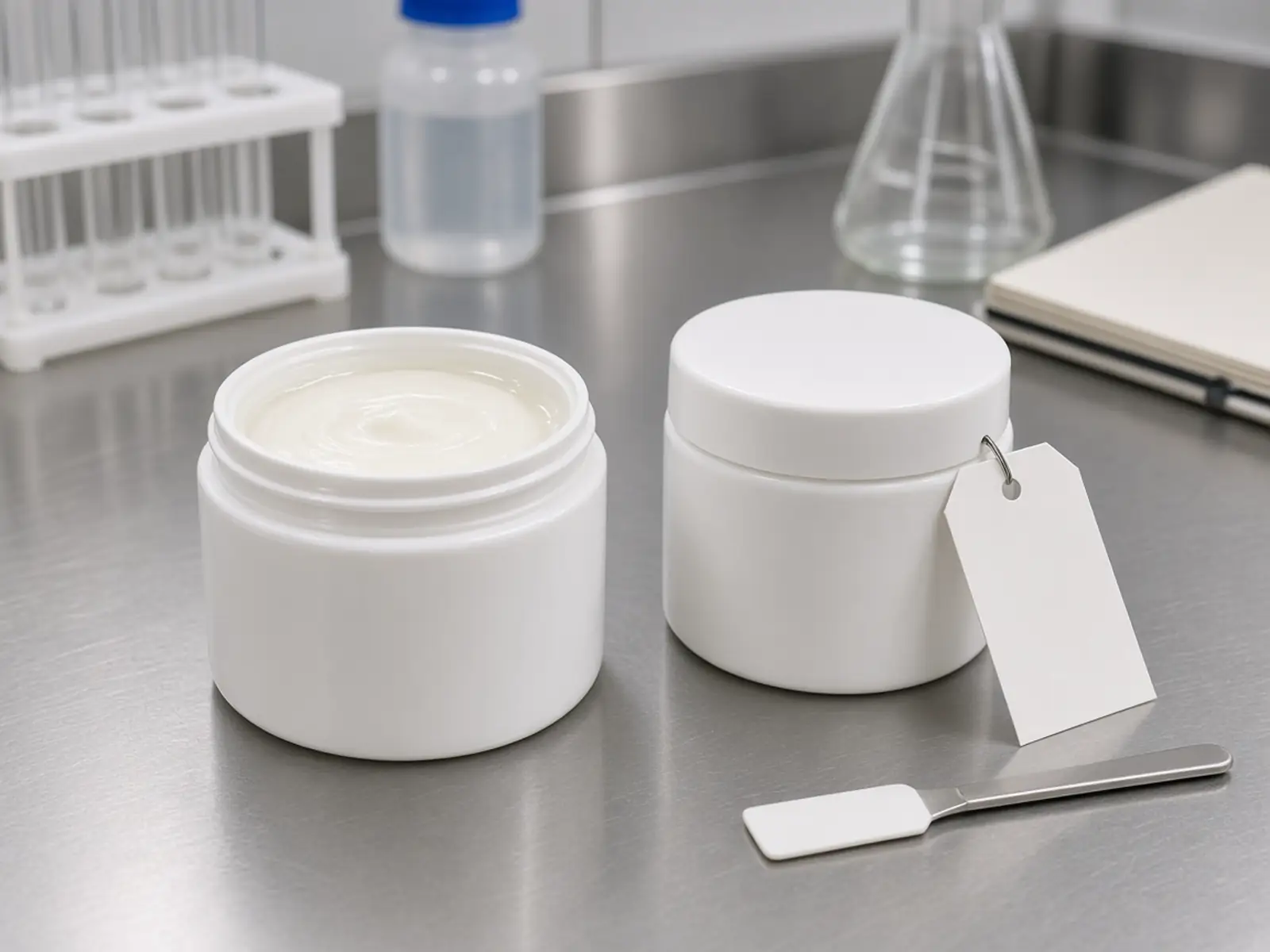 Formulation diagnostics
When a prototype cream turns sour, weeps, or grows, stop the evaluation — do not sniff for a diagnosis
A QC sequence for a prototype cream that smells sour, weeps water, or shows visible growth. Separate spoilage red flags from rancid oil and from a physical split. Cosmetic formulation only — not a health diagnosis.
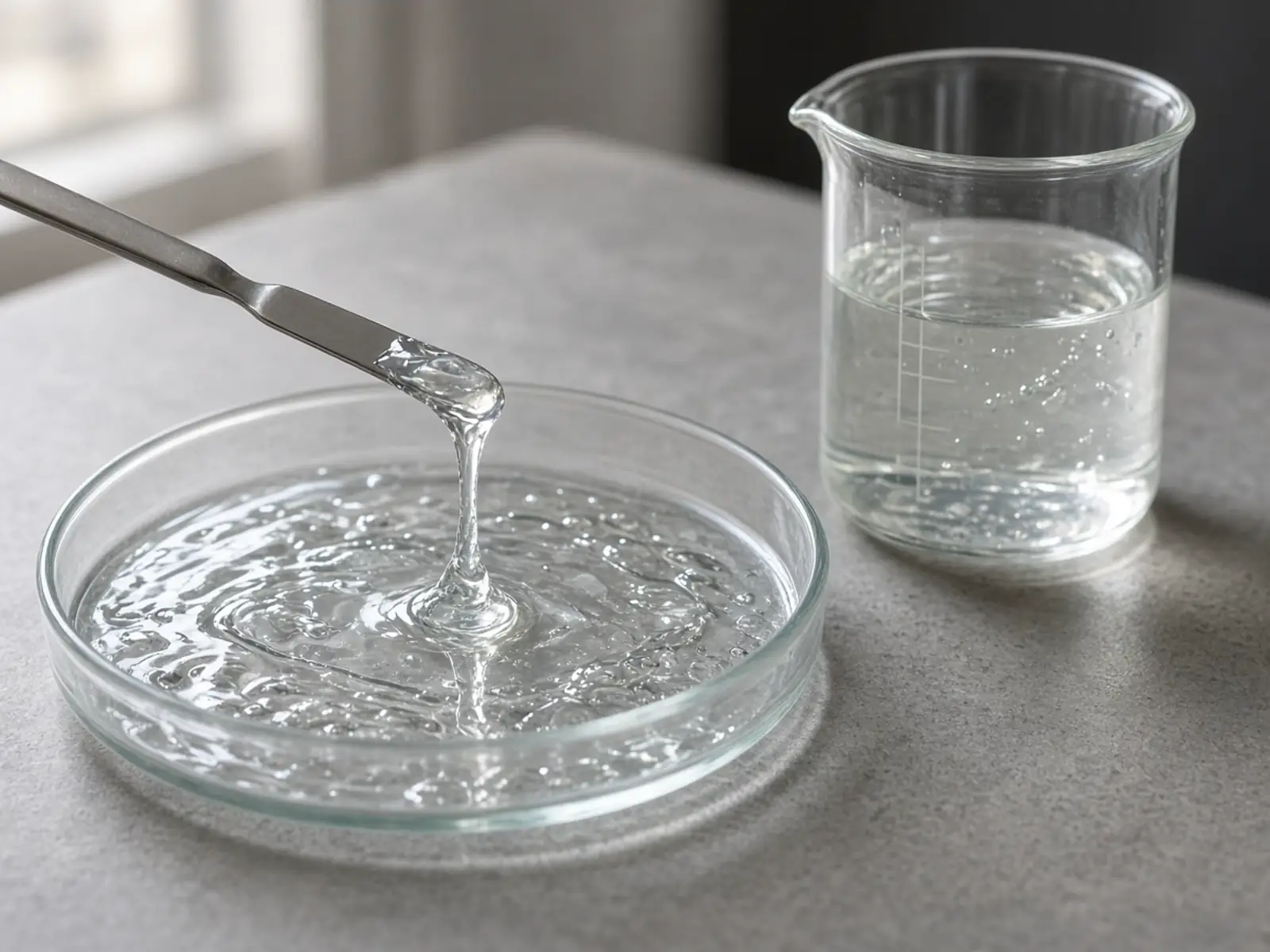 Formulation diagnostics
Tack after the water leaves is a film-and-solids problem — a normal viscometer does not clear it
Sensory troubleshooting for a water-rich serum or lotion that stays grabby after water leaves, while the cup still looks fine. Humectant solids, polymer film, dose and the next layer — not a carbomer-gel failure page. No invented percentages.
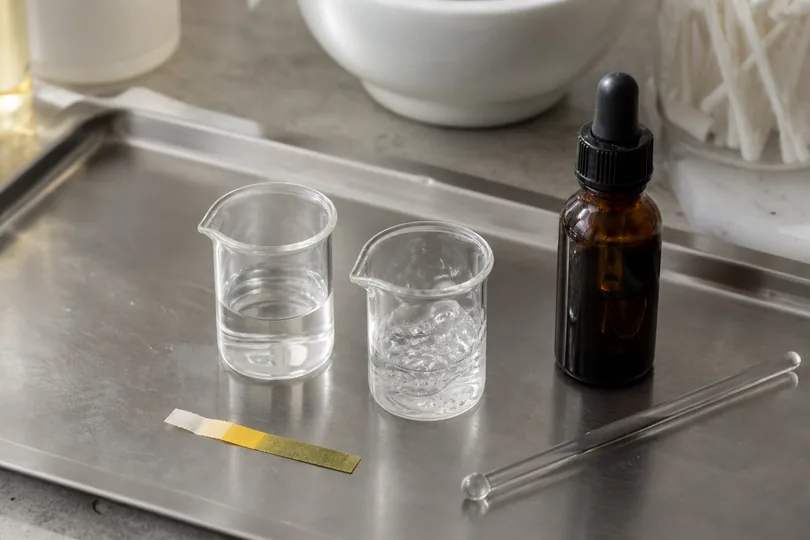 Formulation diagnostics
The preservative did not ‘fail the serum’ — the finished pH left its window
Why a preservative chosen on a water mock-up fails after carbomer neutralization or a concentrate walks the finished pH. Window, not a serum shopping list.
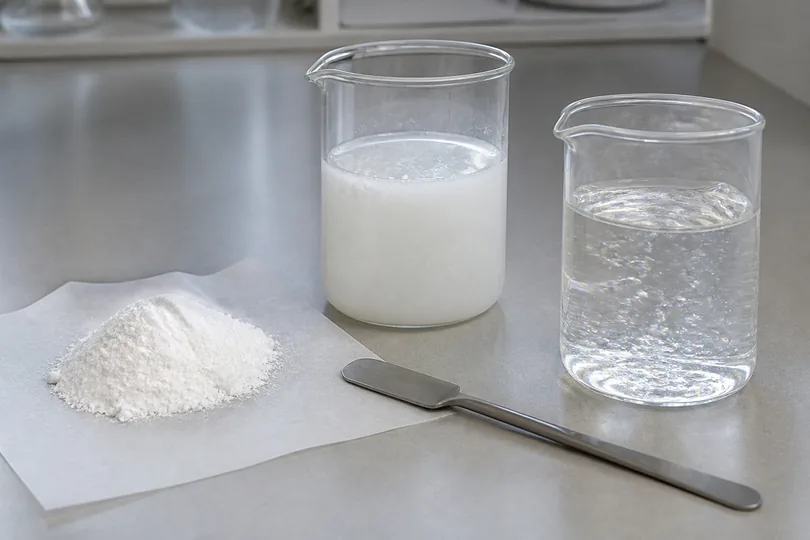 Formulation diagnostics
If the carbomer never stood up, do not write a salt-shock story yet
Why a carbomer slurry stays watery or full of fish-eyes. Process order and local alkali — not the electrolyte-thinning page and not a thickener shopping list.
 Formulation diagnostics
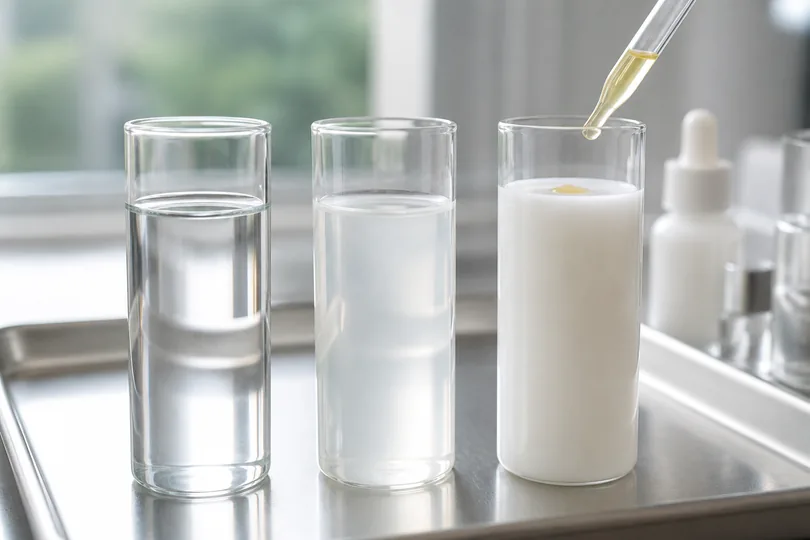
A solubilizer that cleared a trace can still milk the toner when the oil load grows
Why a ratio that cleared a trace fragrance milks a toner when perfume or leftover EO is doubled — load overrun, not the trace how-to and not role theory.
Cream emulsions
Cream emulsionsCream was stable until fragrance? Diagnose the late oil load
Why a stable-looking cream can split after fragrance or essential-oil addition during cool-down.
 Cream emulsions
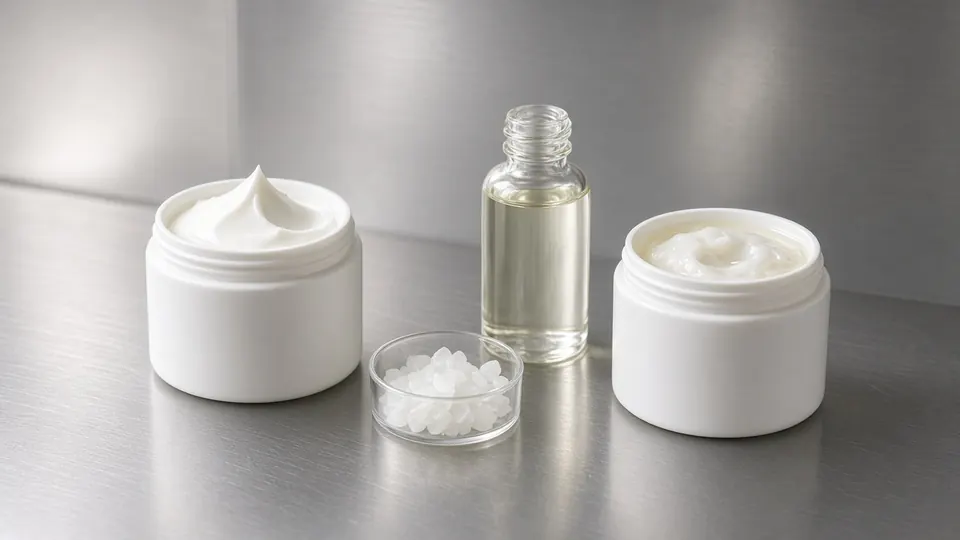
If the 48-hour cup still peaked, a week-later squalane ring is a delayed oil-load, not ‘bad squalane’
The 48-hour retain held a peak. A week later the squalane-rich cream showed an oily meniscus. Delayed oil-load creaming — not a first cool-down liquid-crystal clock and not the 24–72 h water-ring tree.
 Cream emulsions
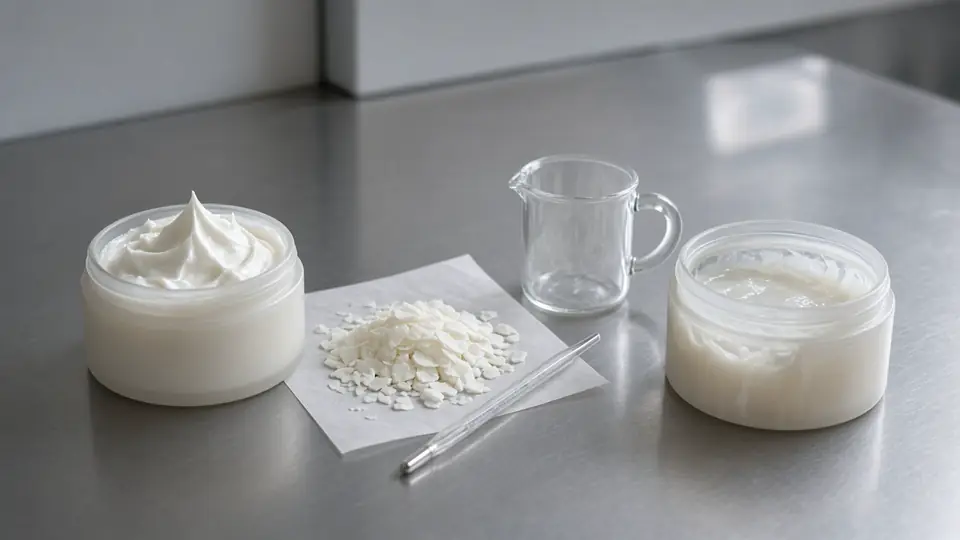
A cream that looked emulsified and then went thin after cool-down missed the liquid-crystal clock
The cream looked emulsified in the kettle, then slumped into a lotion after the first cool-down. How a formulator times liquid-crystal build — not a 24–72 h water-ring split and not Olivem-versus-Emulgade shopping.
 Cream emulsions
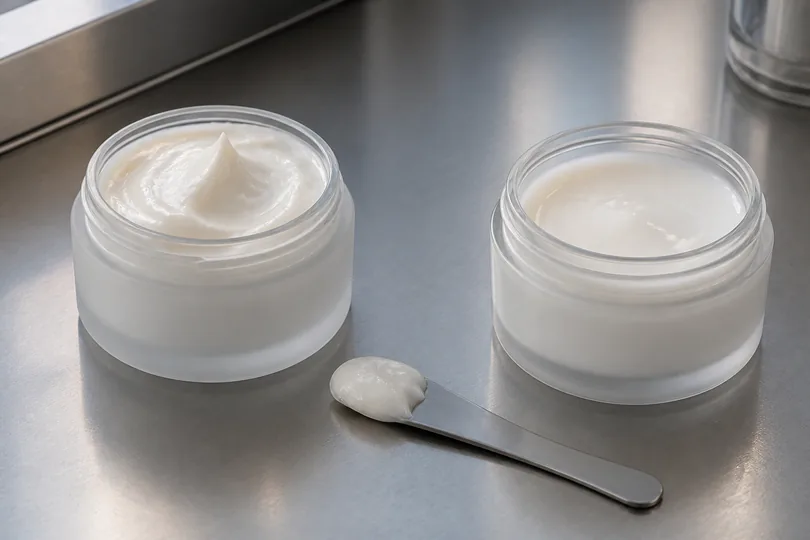
Pick the emulsifier for salts and feel, not for the prettier INCI story
When an Olivem-class liquid-crystal feel and an Emulgade-class workhorse disagree on electrolytes and soaping. Selection trade-off, not a split diagnosis.
 Cream emulsions
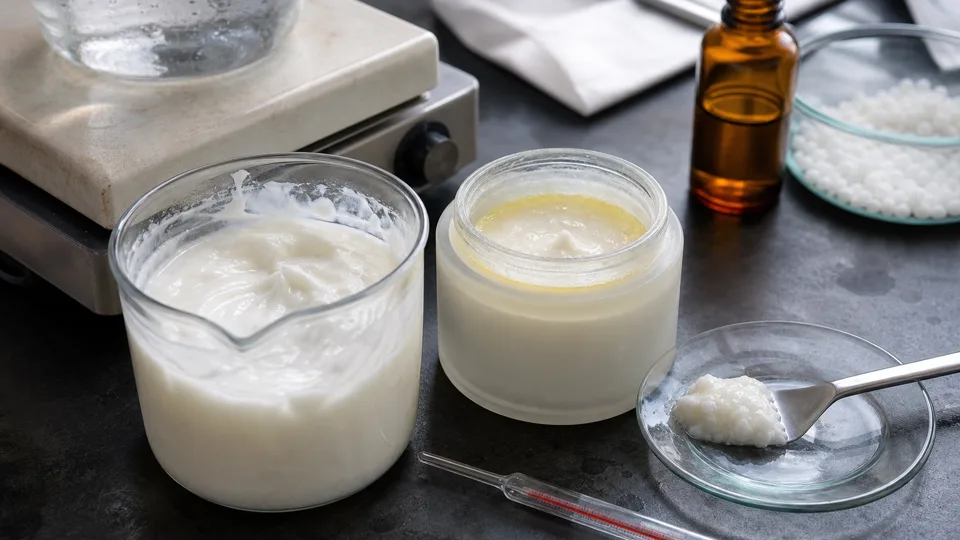
Why a face cream looks fine in the beaker — then splits after cooling
A practical diagnostic for O/W face creams that look stable in the beaker then oil off, synerese or grain after cooling: phase temperatures, emulsifier placement, cooling rate and post-additions.
Botanical extracts
Botanical extractsThe word glycolic on a botanical extract does not make it glycolic acid
“Glycolic extract” usually describes a botanical extraction carrier, not an AHA claim. Read the INCI, carrier and plant identity before formulating.
 Botanical extracts
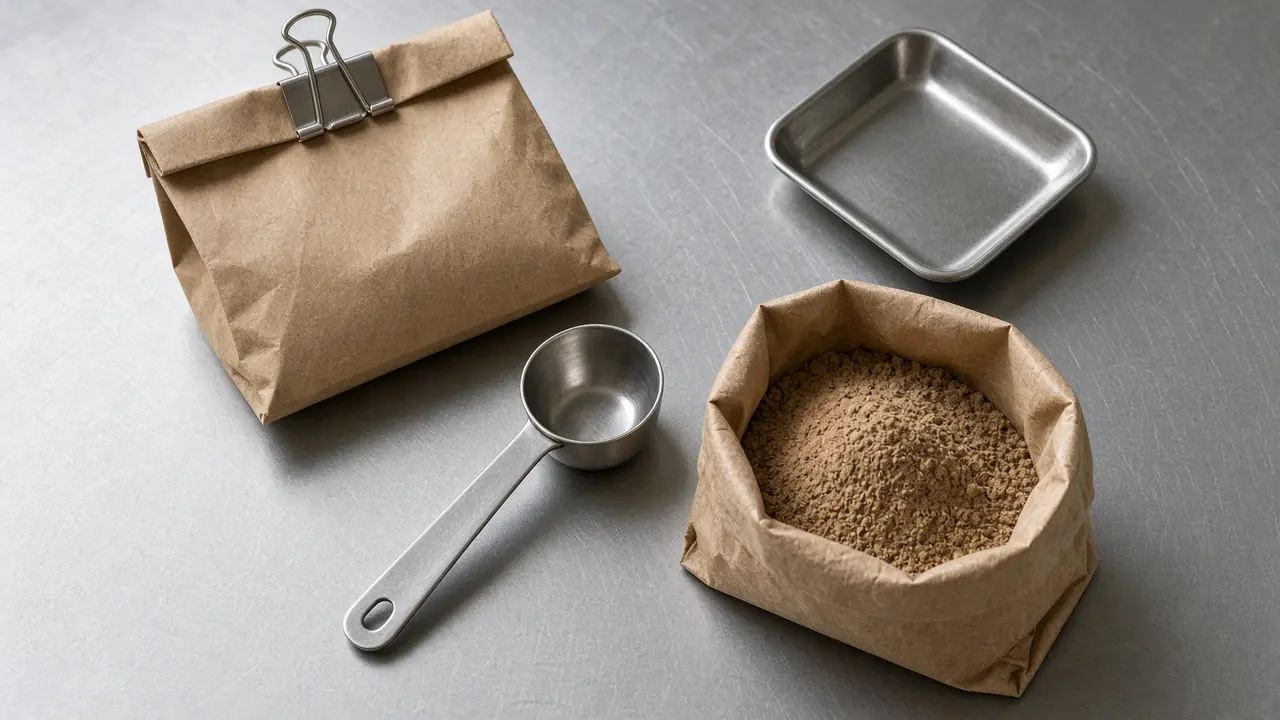
After re-close exists, a shared scoop is still a second plant
Re-close is already written. Labs still walk one scoop through witch hazel and green tea. How a formulator separates two plant powders — not open-time, not humidity mass, not carrier/excipient.
 Botanical extracts
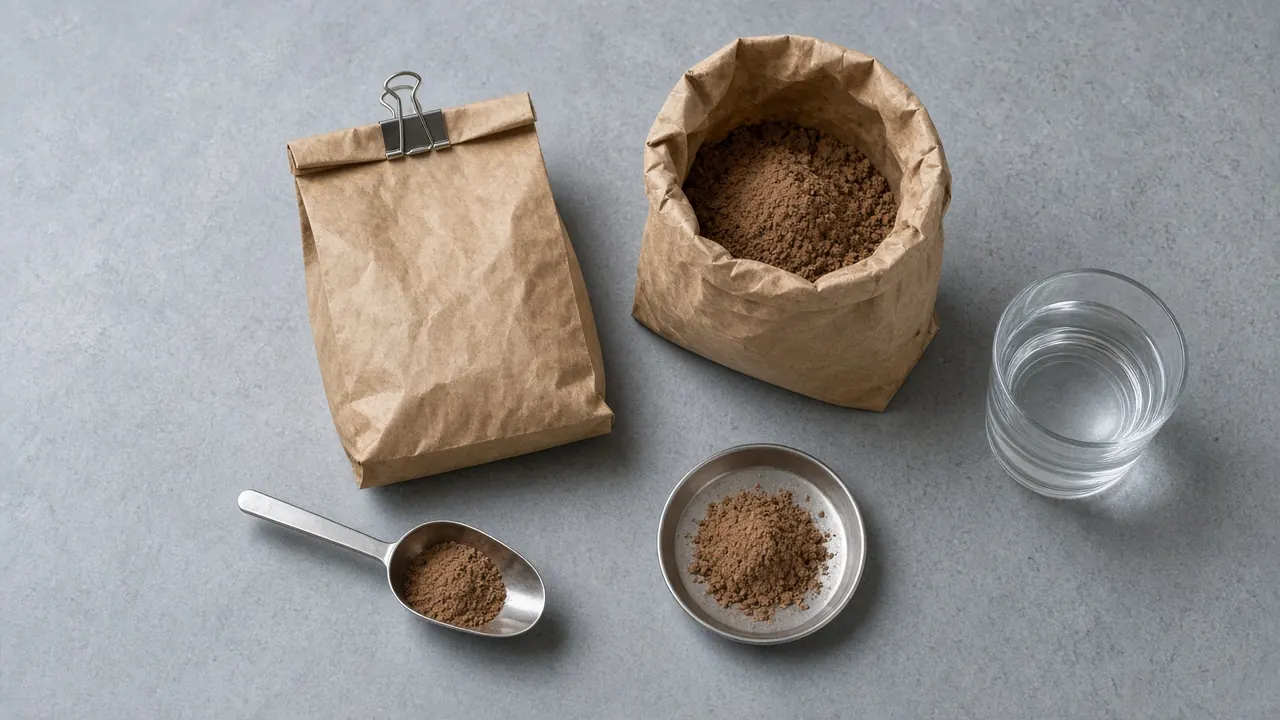
Once humidity is on the weigh sheet, the sack is a clock, not a jar
The incoming-mass drift is already diagnosed. Labs still leave the bag open as a communal scoop. How a formulator writes open-time and re-close — not a second weigh page, not carrier/excipient, not grind identity.
 Botanical extracts
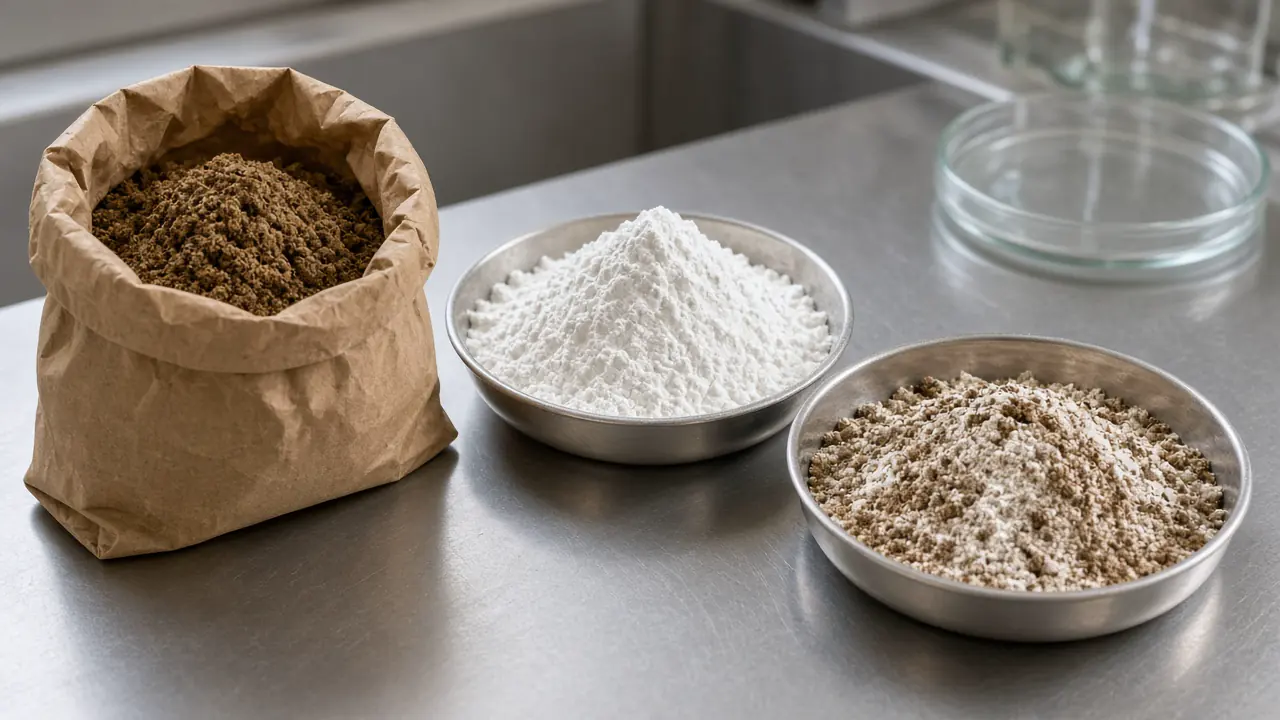
If the file names a carrier, the pan is two objects, not a plant scoop
Labs treat 1 g of brown powder as 1 g of plant. How a formulator reads this lot’s carrier or excipient line first — not grind identity, not ratio-versus-solids math, not humidity mass drift, not sediment.
 Botanical extracts
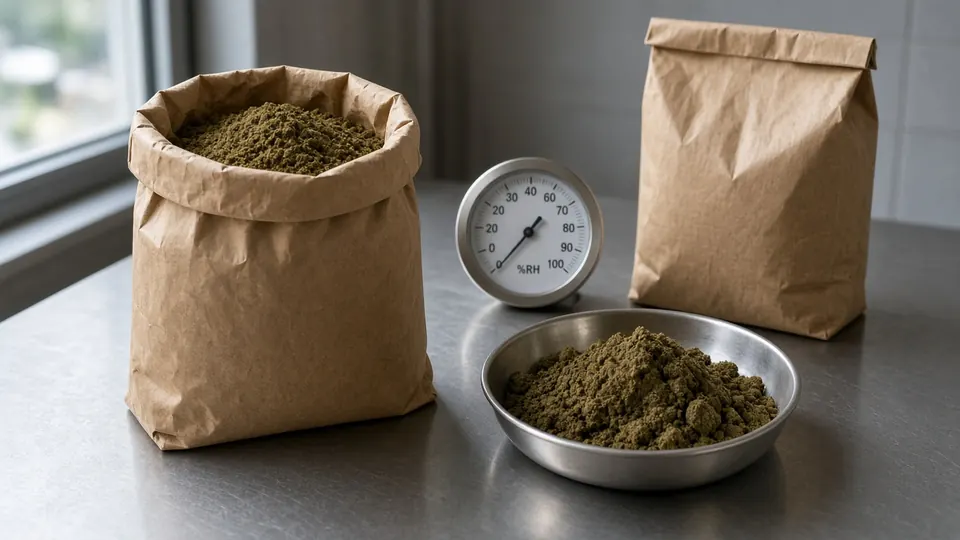
If the bag sat open, the pan is humidity, not a reason to rewrite the extract’s plant ratio
The opened bag gained mass on a humid bench. The solids line no longer matches the pan. Incoming-mass drift — not ratio-versus-solids dose basis, not grind identity, not sediment.
 Botanical extracts
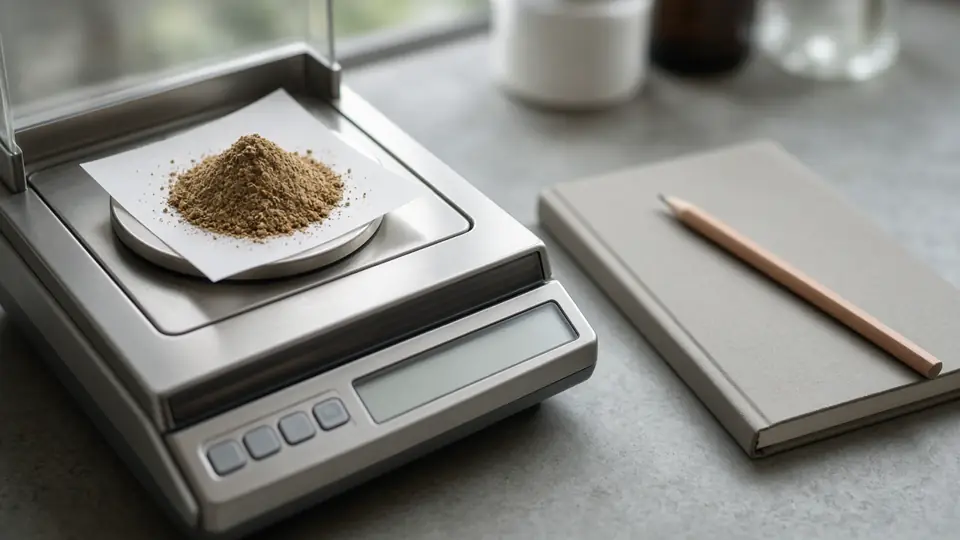
Once the extract form is chosen, the next fight is what the number on the pan means
The chassis is already chosen and the powder is on the pan. How a formulator reads this lot’s file for the weigh basis — not which extract form to buy, and not whether the powder is milled herb.
 Botanical extracts
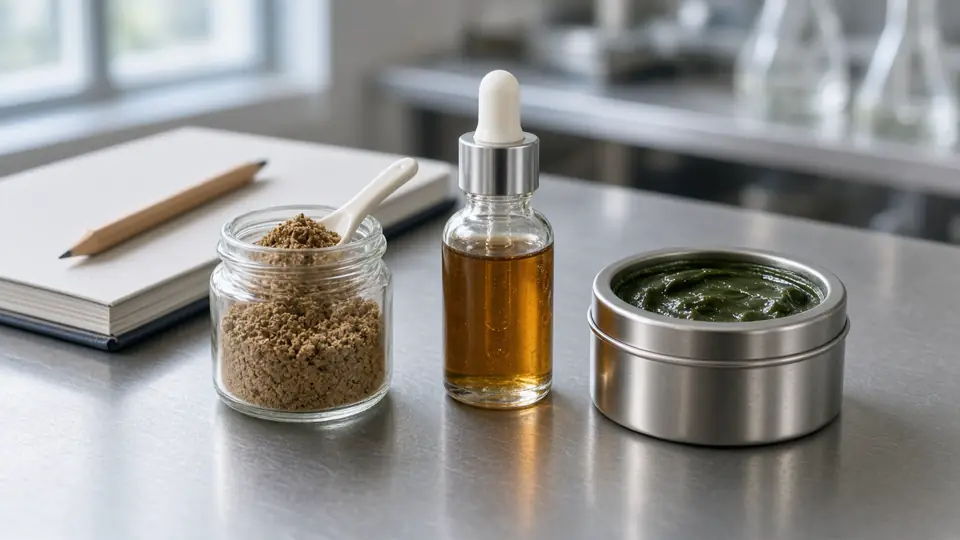
The plant name is not a specification. The extract form is.
Purchasing locked ‘green tea’ or ‘witch hazel’ before anyone named the commercial form. How a formulator chooses dry powder, glycolic liquid or a CO2 cut from the brief — not from a plant-name cart.
 Botanical extracts
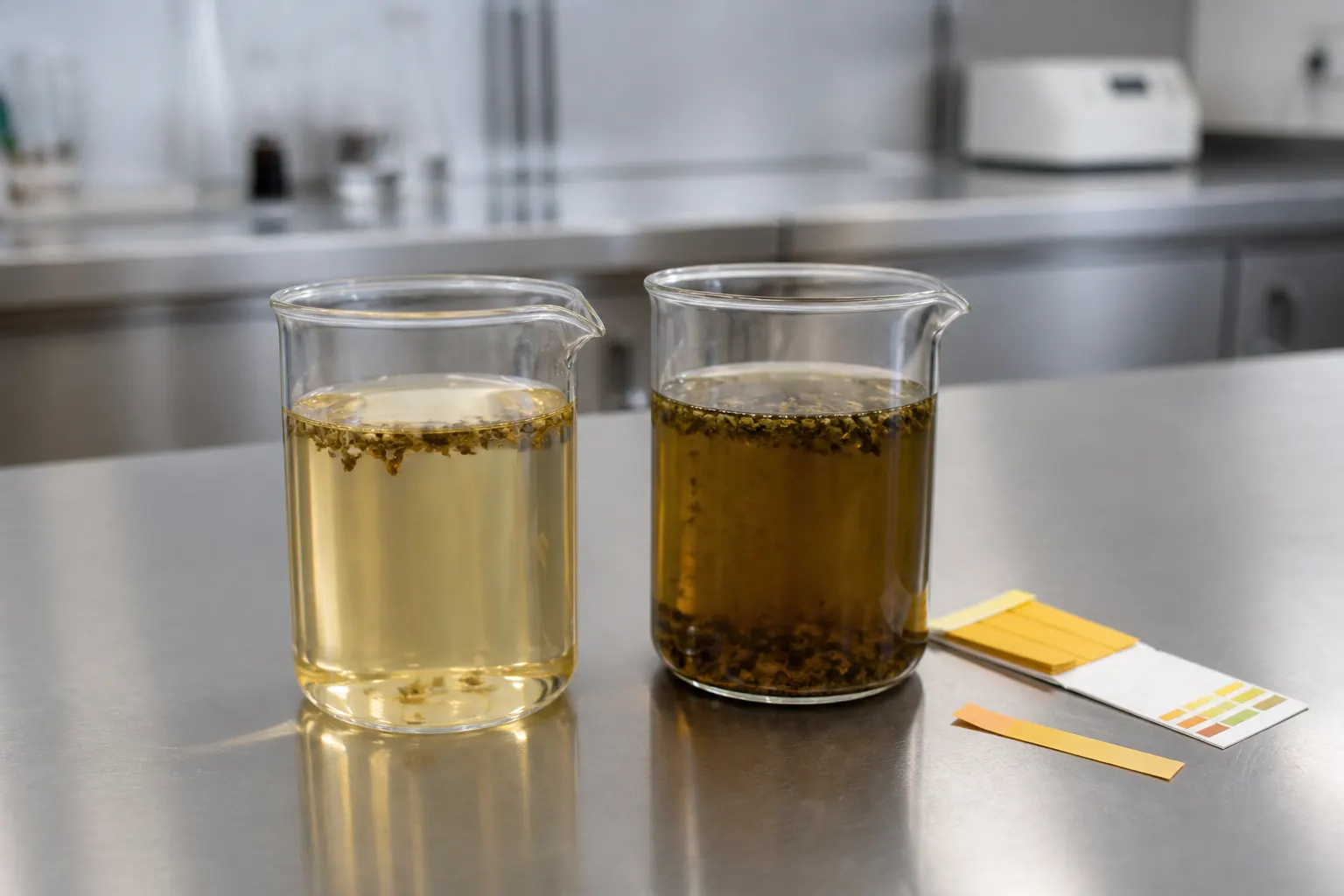
A optically quiet extract water can still change colour without throwing sediment
Why a quiet extract water can shift colour and odor over days: pH, light, metal, lot. After it already cleared — not sediment, not grind identity, not water-versus-oil assignment.
 Botanical extracts
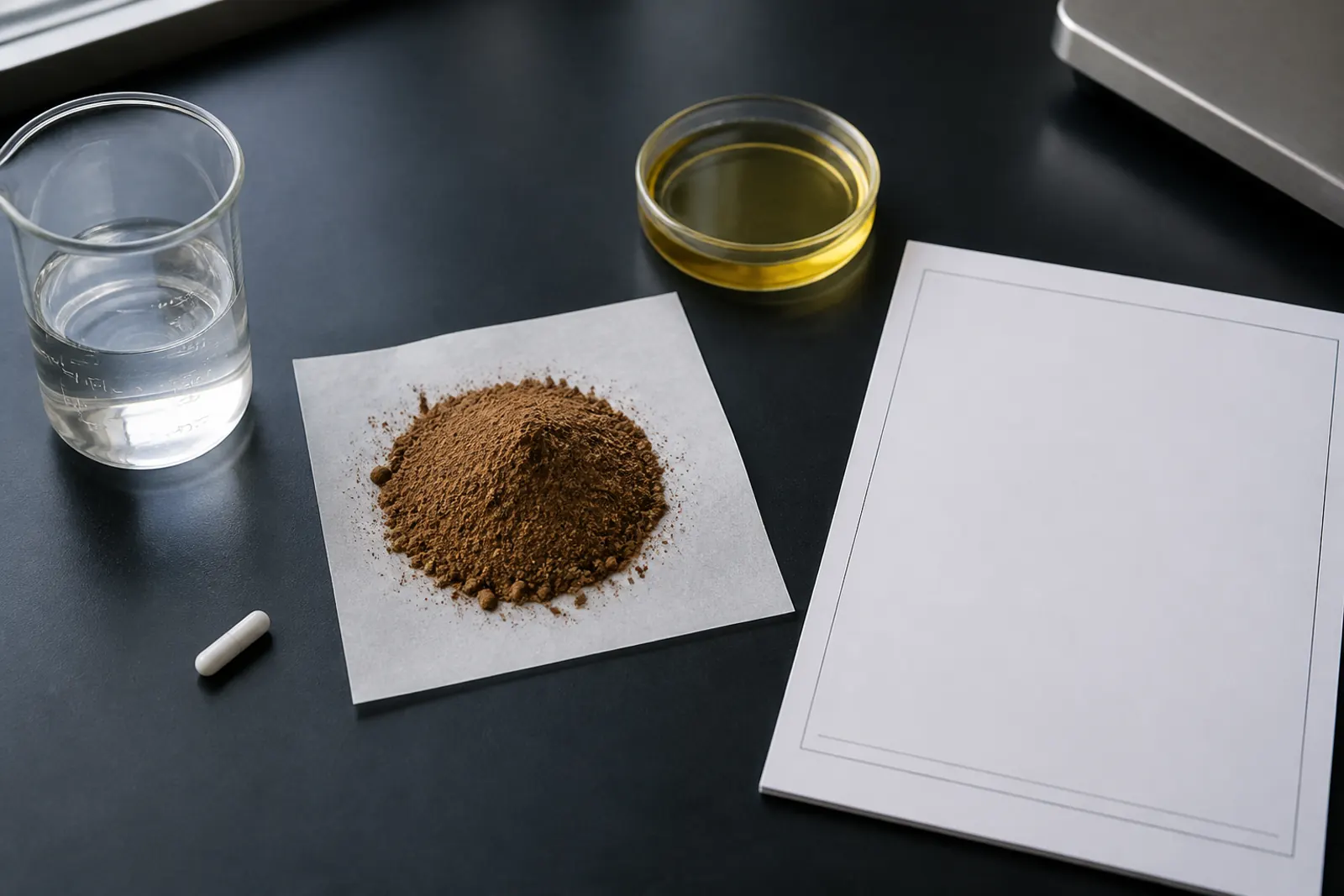
The specification assigns the phase — your favourite solvent does not
How to assign a dry botanical powder to water or oil from solubility, carrier and phase language on the file. Not a sediment tree, not extract-versus-grind identity, not solution-versus-dispersion optics.
 Botanical extracts
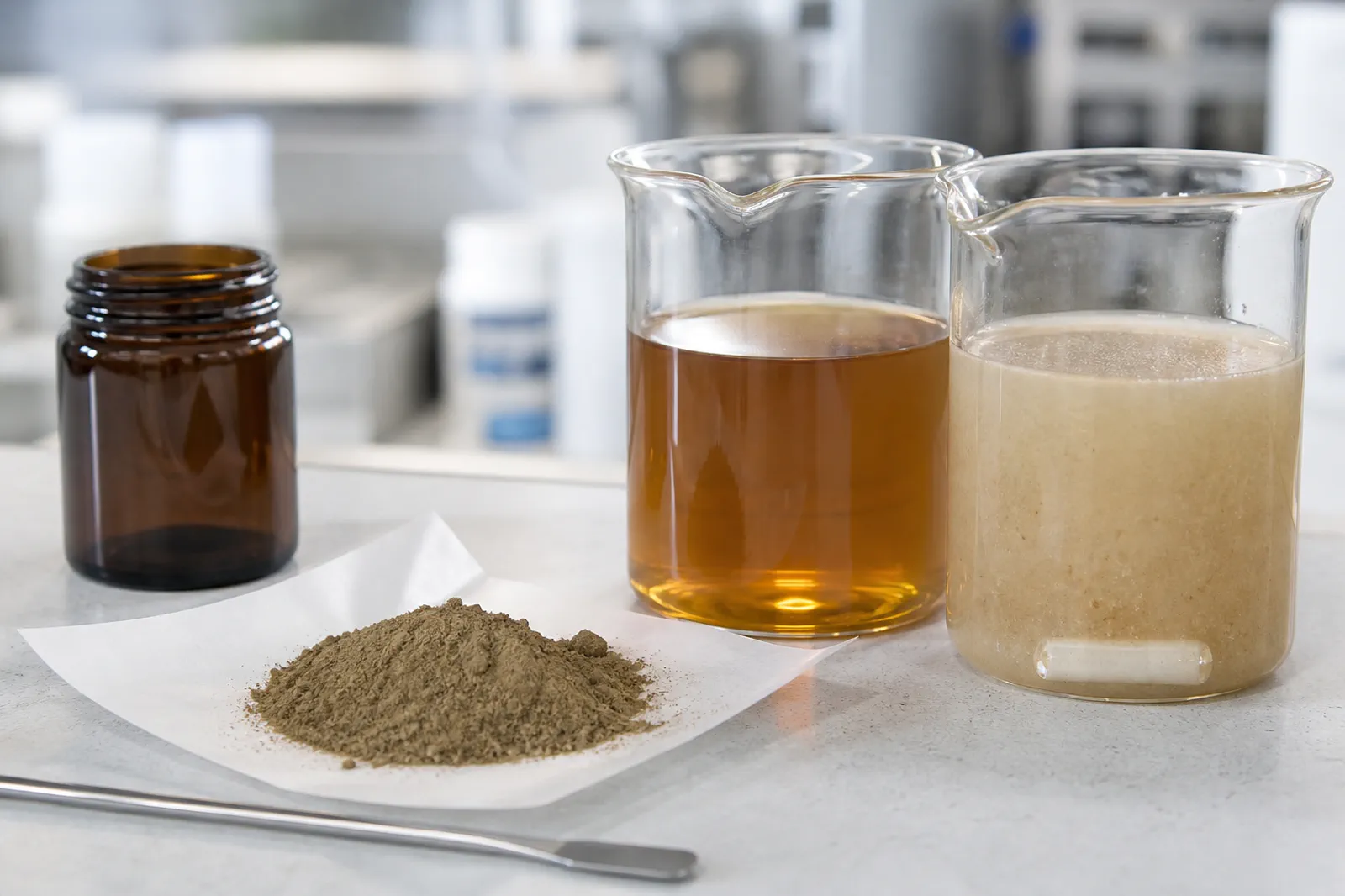
Write the optical target first: a true solution and a stable dispersion are different products
Decide whether a dry botanical powder must become a true solution or an honest dispersion before you mix. Optical target, TDS language, when to buy a liquid cut. Not a sediment cause tree and not extract-vs-grind identity.
 Botanical extracts
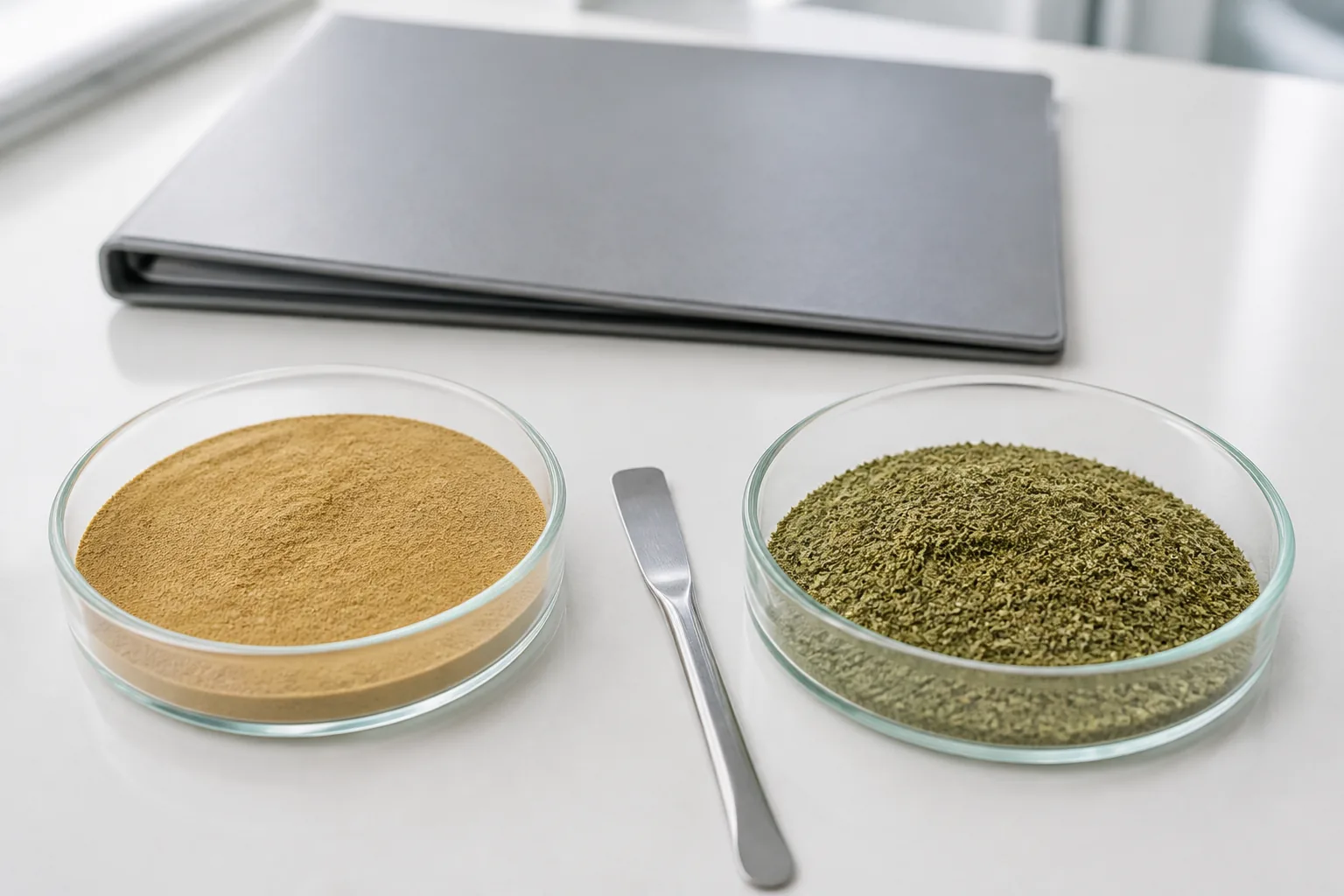
A brown powder with a plant name is not automatically a dry extract — the file has to say so
How to tell a documented dry botanical extract from milled herb: INCI, solvent history, carrier, extraction ratio, and why appearance cannot set dose, solubility or preservation. Not a sediment how-to.
 Botanical extracts
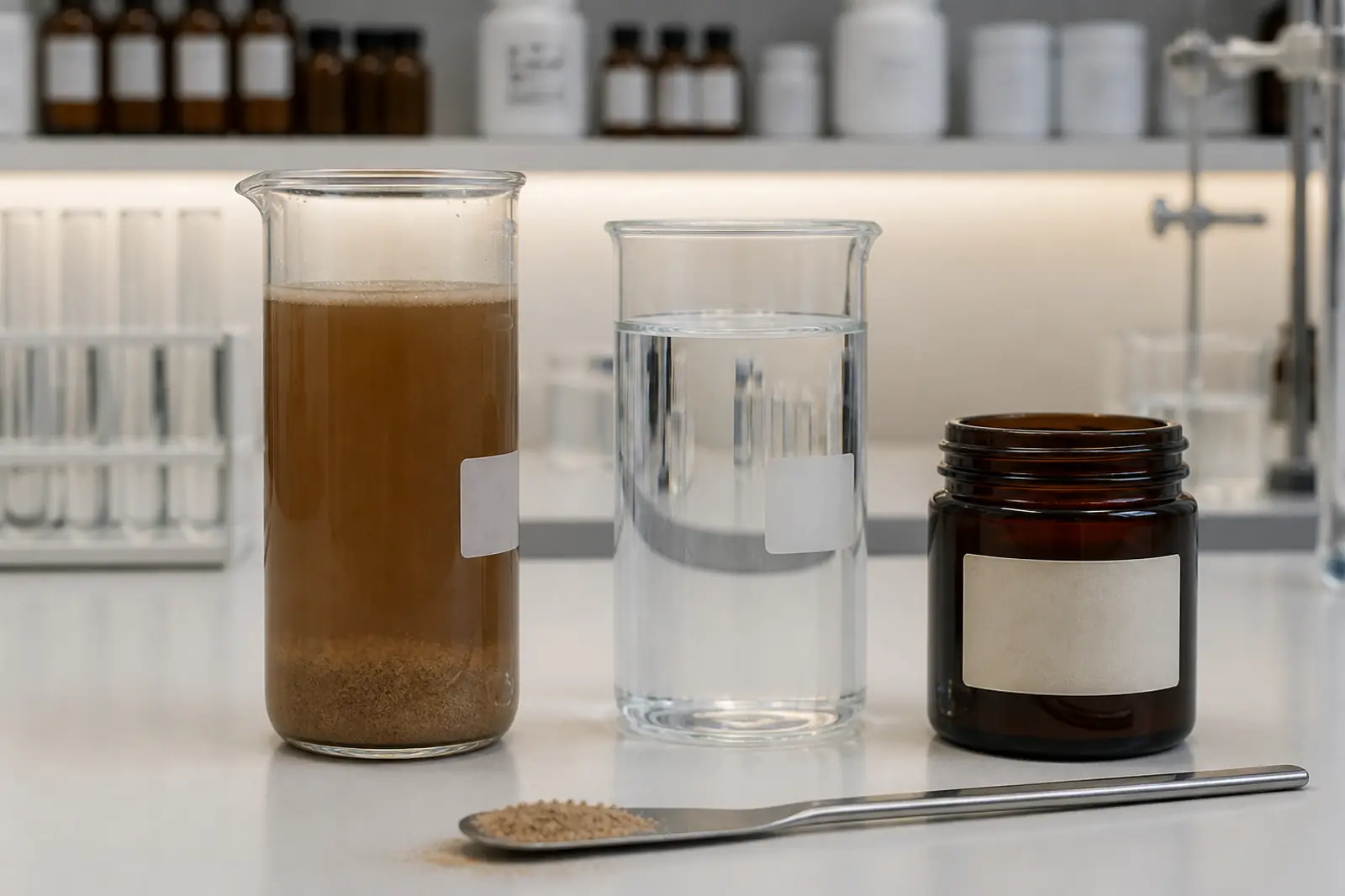
Sediment in a ‘clear’ extract toner is evidence — it is not automatically a bad plant
A cause tree for powdered extracts in toners and serums: incomplete wetting, plant fines, later precipitation, colour leach, and preservation of the hydrate. No copied storefront recipes.
Carrier oils
 Carrier oils
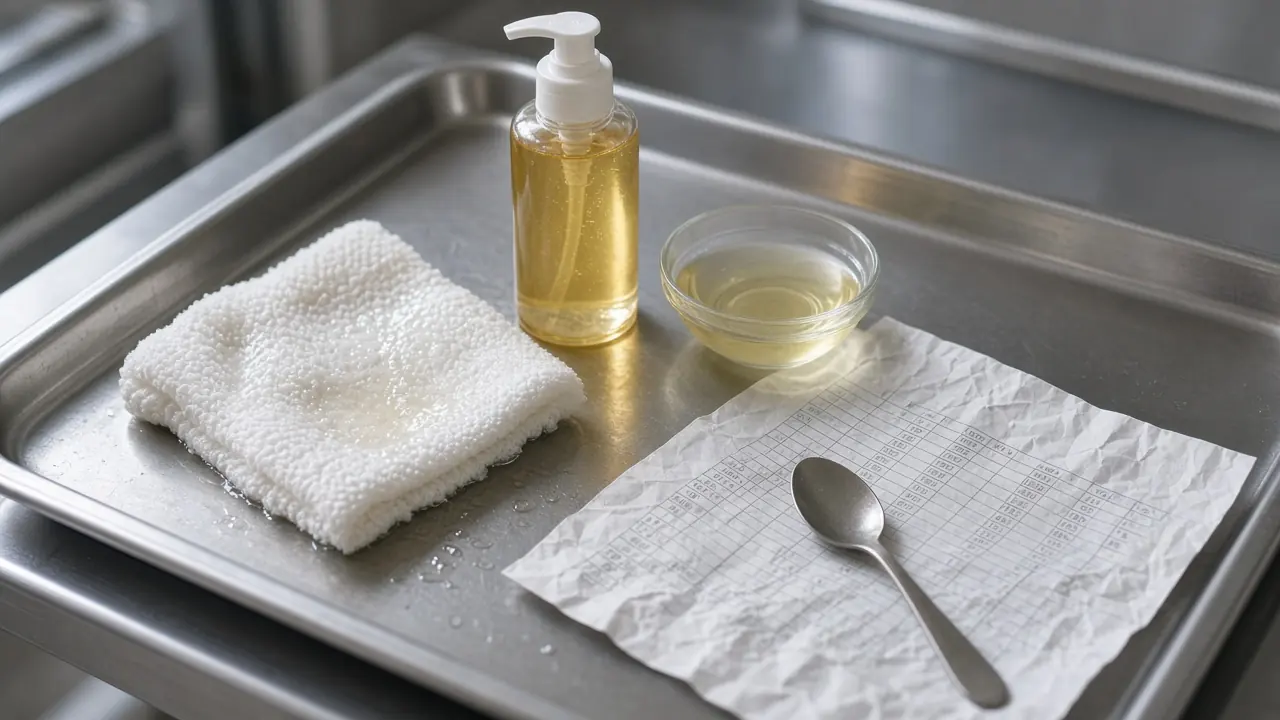
If the table scored an overnight smear, it has not judged this wash-off oil
Internet tables still score overnight neat-oil patches. A 2026 oil cleanser sits for a minute and then goes down the drain. How a formulator reads contact time — not yesterday’s cream page, not a peptide acne article.
 Carrier oils
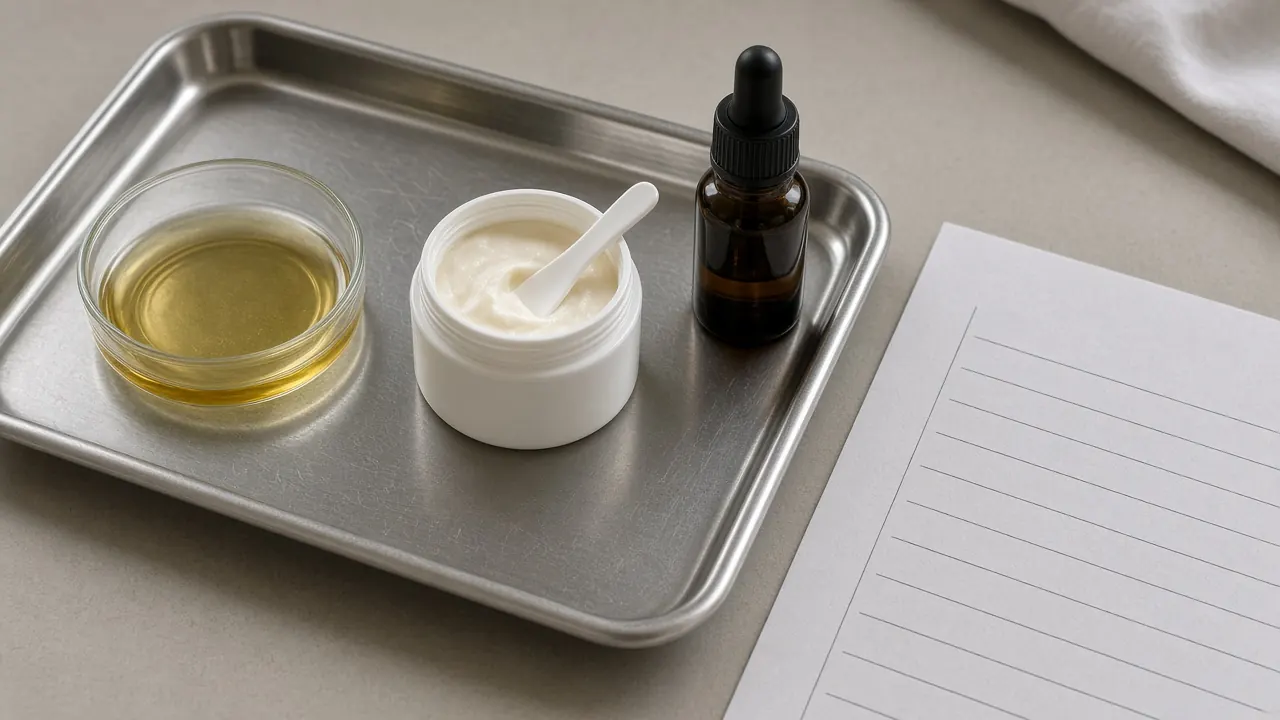
If the table scored a neat oil, it has not judged this cream
Internet tables still rank neat carrier oils. Pore events happen in a finished leave-on chassis. How a formulator reads the oil as one passenger — not a peptide acne page, not a best-oil ranking.
 Carrier oils
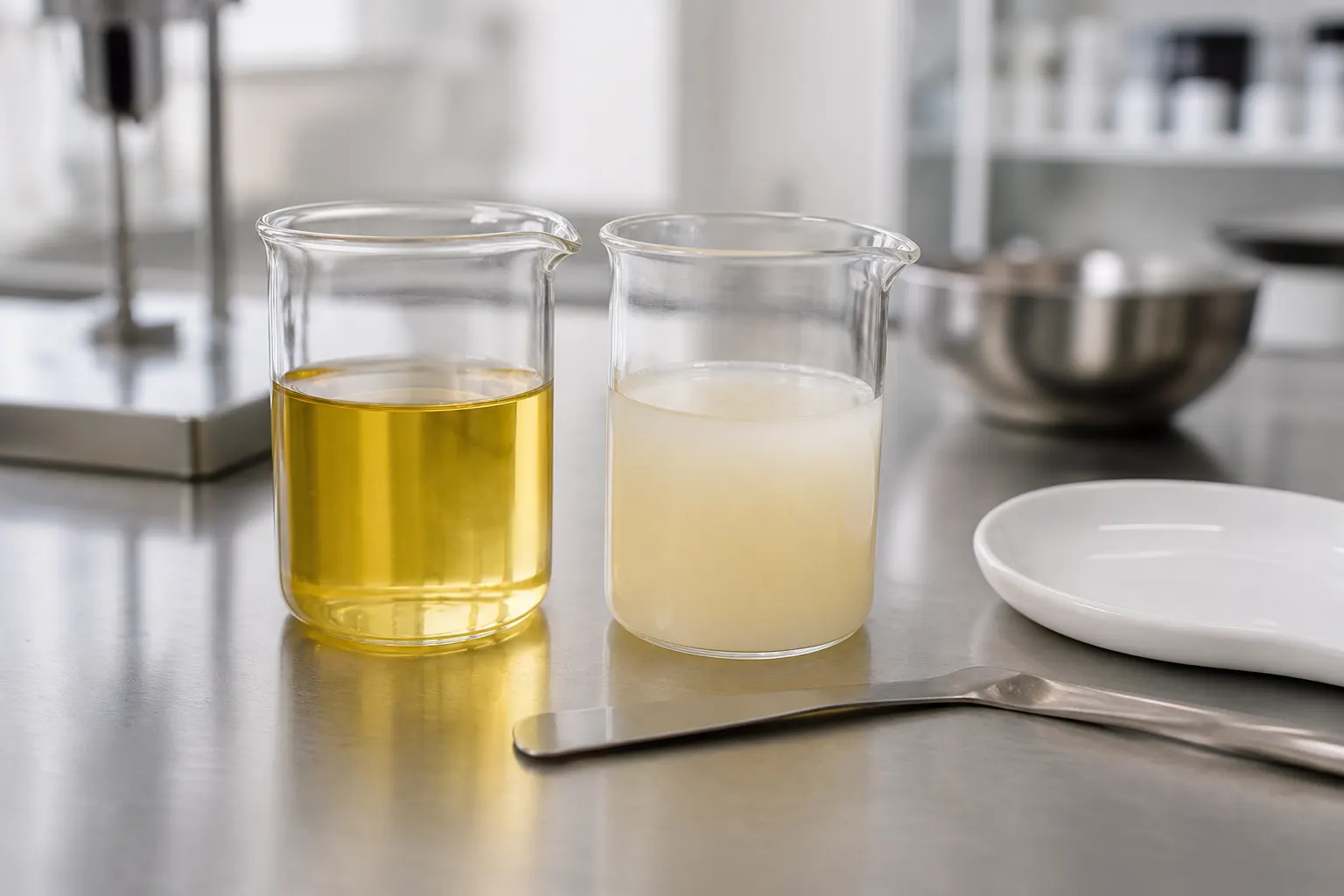
A cloudy oil blend can still be a physical mix, not proof the drum went rancid
Why a clear anhydrous oil mix can haze after a cold night: temperature, wax-ester seeding, moisture, shea crystals. Physical mix — not peroxide history and not a process-grade fight.
 Carrier oils
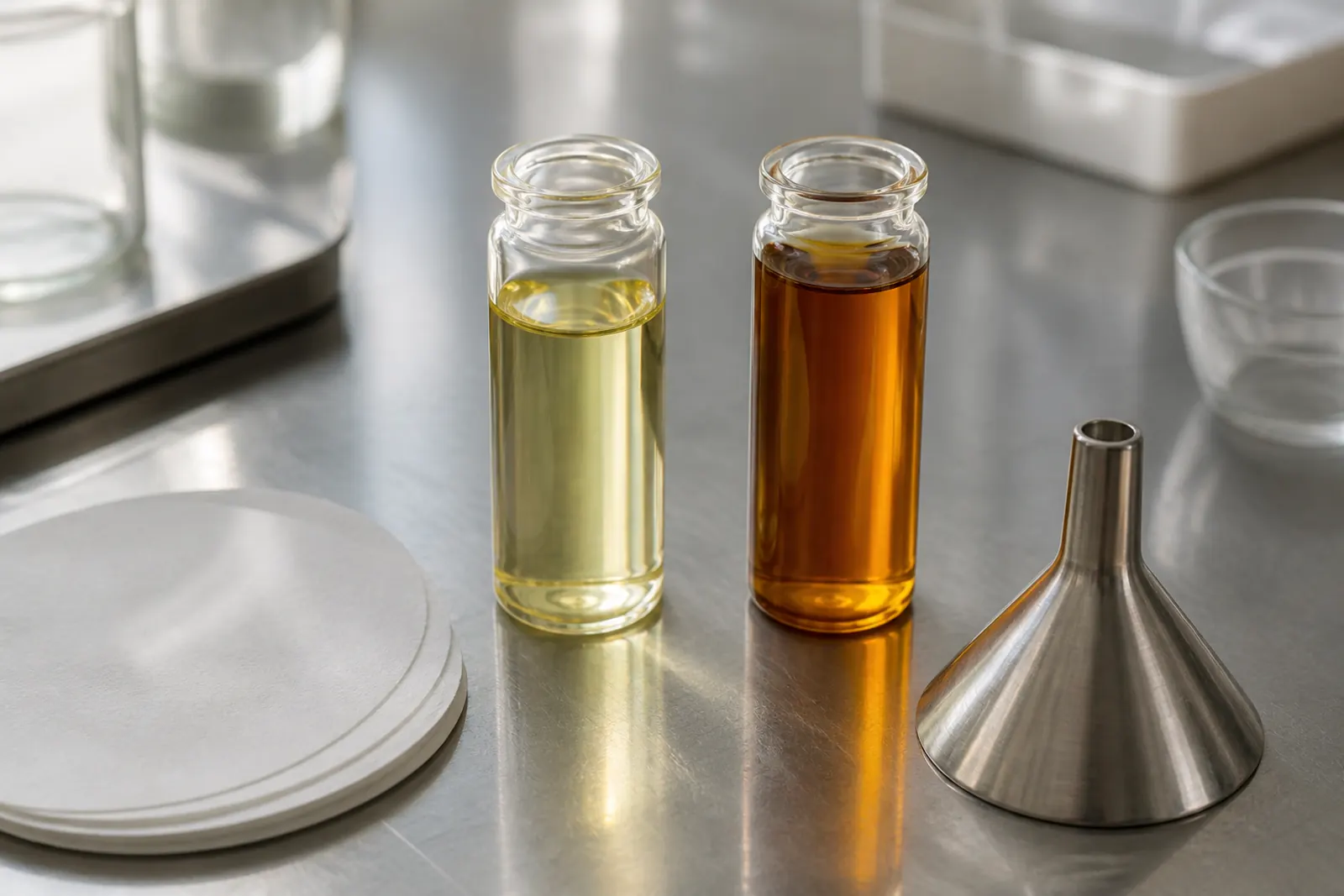
Cold-pressed is a process grade — it is not automatically the honest oil for the cream
When a cosmetic oil phase should take a refined lot versus an unrefined or cold-pressed one: odour, colour, filterability, and what the process file actually bought. Not a rancidity diagnostic.
 Carrier oils
Oleic versus linoleic is a feel-and-process choice — not a pore-ranking table
Choose an oleic-leaning or linoleic-leaning oil phase for dry-down, cushion, and emulsifier load. Formulation literacy only. No comedogenicity tables and no medical acne claims.
 Carrier oils
A rancid carrier oil is a history of oxygen — not a mysterious ‘cheap batch’
A bench diagnostic for face oils and cream oil phases that smell paint-like or darken: incoming peroxide, fatty-acid load, antioxidants that are not preservatives, and when squalane is the honest swap.
Essential oils
 Essential oils
Once the challenged bottle is named, a blank dropper is a second object
The challenged bottle is already named. Labs still decant into a blank dropper and lose the code. How a formulator treats a transfer vessel — not two-bottle identity, not raw leftover oxidation, not the challenge clock.
 Essential oils
If the challenge names a lot, this opened dropper is a second object
The clear-gel challenge already exists. Labs keep using yesterday’s opened oil. How a formulator binds the challenged lot — not challenge-after-clarity, not raw leftover oxidation, not optical load.
 Essential oils
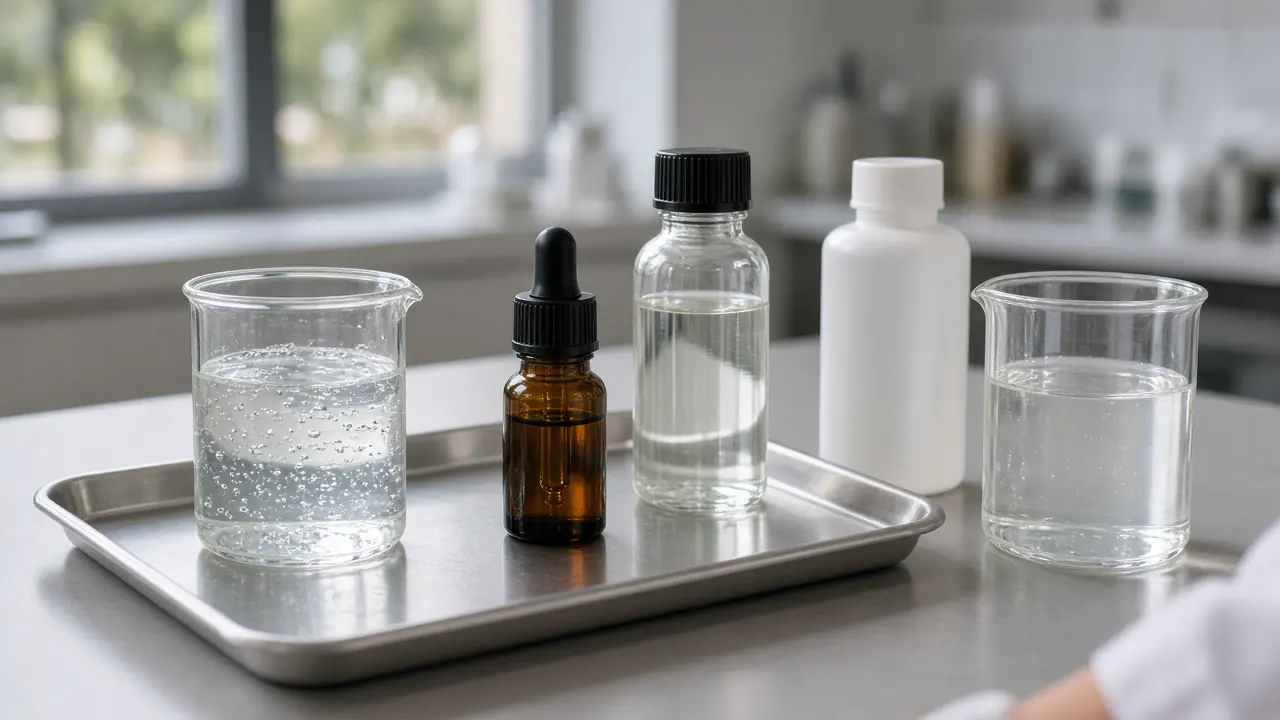
If the EO gel is already clear, the next job is a challenge, not a victory lap
The water gel went optically honest after the essential-oil and solubilizer load. Labs then treat the beaker as already passed. How a formulator times a challenge after those two objects — not optical load, not toner milking, not PDRN nutritive-load.
 Essential oils
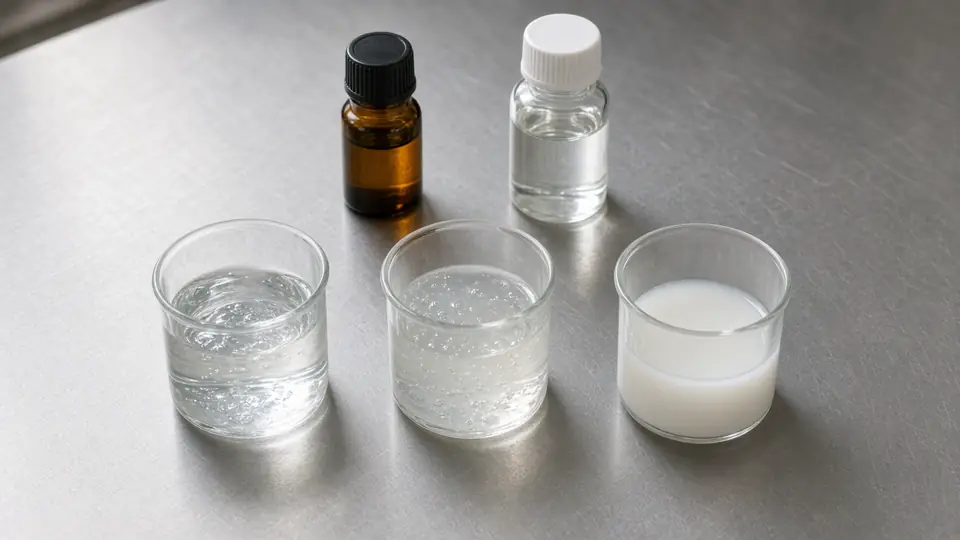
If the gel must stay optically clear, the essential-oil load is a solubilizer brief, not a cream in denial
A leftover lavender drop that cleared a fragrance-oil gel can milk a water gel. How a formulator keeps optical clarity without turning the solubilizer brief into a cream — not IFRA drop-counting and not toner load overrun.
 Essential oils
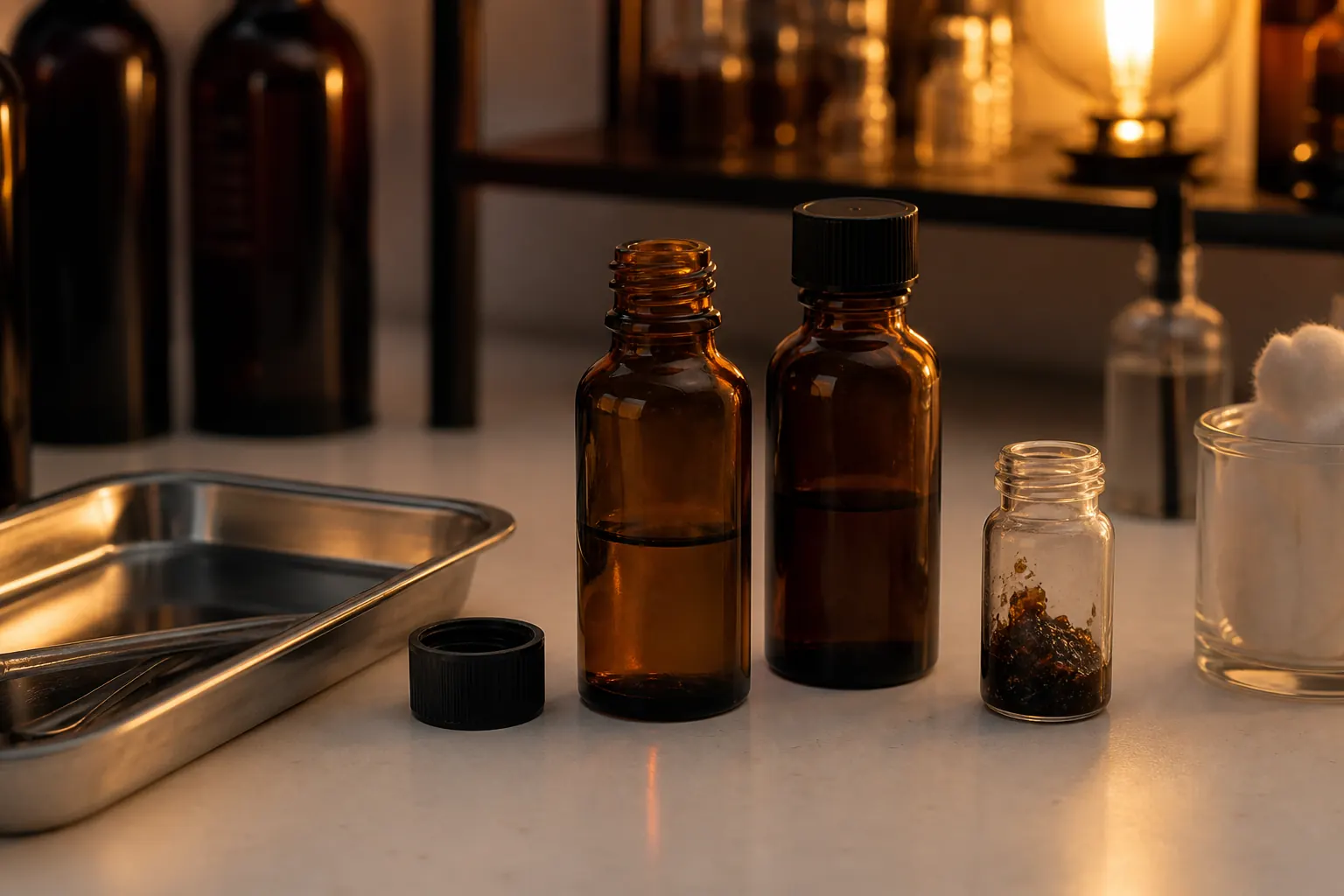
An opened essential oil can oxidise on the bench without becoming a dilution or phototoxicity story
Why an opened essential-oil bottle can smell resinous or harsh while the closed retain still matches the file. Headspace, leftover beakers, documentation — not drop-counting and not citrus-in-daylight.
 Essential oils
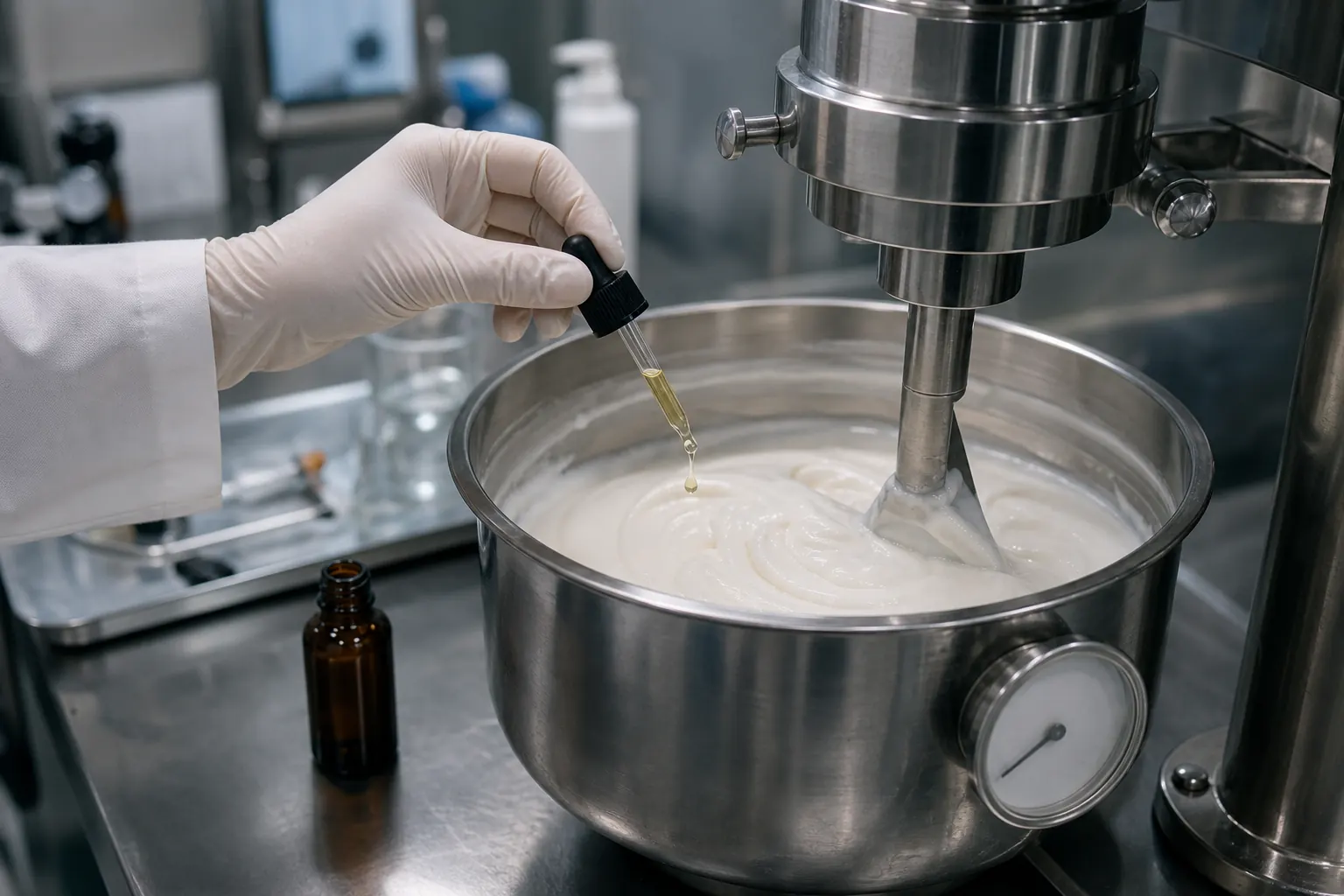
An IFRA category does not tell you which process step gets the essential oil
Which process step takes the essential oil in an O/W cream: cool-down, hot oil phase, or a lipid premix. Not an IFRA category lesson, not drop folklore, not an opened-bottle oxidation file.
 Essential oils
A rinse-off IFRA line is not a face-cream licence — write the product category first
Why a shower-gel IFRA line does not travel onto a face cream. Category assignment, documented lots, and what MO-LAB will not invent. Not drop-counting and not EO-versus-fragrance tool choice.
 Essential oils
Choosing an essential oil or a fragrance oil is a documentation and chassis decision — not a moral one
A formulator’s choice between an essential oil and a fragrance oil: composition variability, IFRA and allergen files, oxidation, solubility role, and scent reproducibility. No aromatherapy claims.
 Essential oils
A few drops of essential oil is not a specification — start with the IFRA file and the chassis
Treat essential oils as IFRA-constrained fragrance materials in a cream or oil, not as therapy and not as drops in water. Distinct from solubilising a trace in a clear gel.
 Essential oils
A citrus essential oil in a day cream is a phototoxicity file, not a brightness story
Why furocoumarin-bearing citrus essential oils do not belong in a daytime leave-on by default. Lemon and sweet orange are different teaching lots — neither is a suntan active.
Peptide serums
 Peptide serums
If the peptide carries a palmitoyl tail, the first fight is the phase, not a water habit
A lipidated peptide dropped into a water-phase SNAP-8 habit. Haze or a cream split follows. How a formulator reads this lot’s phase — not solubilizer-versus-emulsifier theory, not a lyophilized vial, not incoming powder identity.
 Peptide serums
If the tetrapeptide already dissolved, late haze is a chassis event, not a funeral for Eyeseryl
The tetrapeptide dissolved, then the eye gel turned opalescent after neutralize or cool-down. How a formulator times the haze against two lot files — not a PDRN+HA cloud tree and not a peptide-serum failure primer.
 Peptide serums
A clear PDRN gel is not a preserved PDRN gel, and ‘peptide-safe’ is not a protocol
The gel looked clear after PDRN, then a peptide-safe system failed a challenge sketch. How a formulator separates nutritive load from optical cloud and from preservative shopping — without inventing pass criteria.
 Peptide serums
A freeze-dried vial and a cosmetic peptide lot are two purchasing objects
A freeze-dried crimp vial sharing a peptide nickname is not the cosmetic SNAP-8 or GHK-Cu lot. Incoming identity of the commercial object — not dosage-basis math, not INCI-as-assay, not a reconstitution protocol.
 Peptide serums
If the gel stood until the third peptide went in, the polymer already did its job
The blank gel stood. The third peptide concentrate turned it into water. How a formulator reads salt and glycol passengers after addition — not a pre-batch matrix and not ‘add more carbomer’.
 Peptide serums
A clear HA gel that clouded after PDRN is an addition event, not a brand verdict
The hyaluronic gel was clear. After the PDRN lot went in, it went opalescent. How a leave-on formulator times the cloud to two files — not a pairing primer and not a clinic anecdote.
 Peptide serums
A copper peptide next to SNAP-8 is two files, not a forum verdict
Forum threads still vote on whether copper deactivates SNAP-8. How a leave-on formulator reads two lot files instead of a class rule. Cosmetic topical only — not injectable proof.
 Peptide serums
A high peptide brief is a table of files, not a lucky percentage
Before stacking peptide solutions with niacinamide, NAG, solvents and a polymer, document form, solids versus solution, pH windows, salt/solvent tax, preservative and order. No invented universal percent.
 Peptide serums
Close the calculator until the incoming peptide is a named object
Neat powder, a standardized supplier concentrate, and a workshop dilution are three weighing objects. Bind this lot’s TDS/COA and the active basis before any percent is typed.
 Peptide serums
When chelator pages contradict, the GHK-Cu lot file is the experiment — not a forum vote
Supplier pages still contradict on EDTA and copper peptides. How a formulator reads TDS/COA, salt form, pH and a finished-formula assay — without a universal EDTA rule. Cosmetic chassis only.
 Peptide serums
A cosmetic GHK-Cu serum is manufactured for intact skin — not for a procedure tray
Why a preserved copper-peptide leave-on is not interchangeable with a sterile or microneedling-intended product. Intact-skin briefs, documentation limits, and what copy may not say. Not medical advice.
 Peptide serums
Reusing a face copper-peptide chassis on the scalp is a new formula — not a new label
Why copying a copper-peptide face chassis onto the scalp is a new brief: flow, sensory, leave-on area, supporting actives, pack and claims. No hair-growth efficacy. Lot windows stay on the TDS.
 Peptide serums
Pregnancy questions about cosmetic peptides are usually about missing files — not a yes/no class verdict
A claim-literacy brief for Argireline, Matrixyl and multi-peptide serums in pregnancy: missing pregnancy-specific data, finished-formula context, and why injectable stories do not transfer. Not medical advice.
 Peptide serums
Peptide timelines are endpoints, not a shared calendar you can copy onto a serum
There is no honest universal clock. Separate the peptide, the finished formula, and the endpoint a study actually measured — and what a COA cannot promise.
 Peptide serums
A peptide serum is not a stronger cream — choose the vehicle by goal, not by a penetration myth
A serum does not automatically penetrate better. Compare water phase, oil phase, preservation, sensory use and process — then pick the chassis that matches the goal.
 Peptide serums
Peptides do not carry a universal “clogs pores” score — interrogate the finished base first
Hydrophilic cosmetic peptides are not classic comedogenic oils. Congestion more often tracks emollients, waxes, silicones and individual reaction — not a blanket peptide verdict.
 Peptide serums
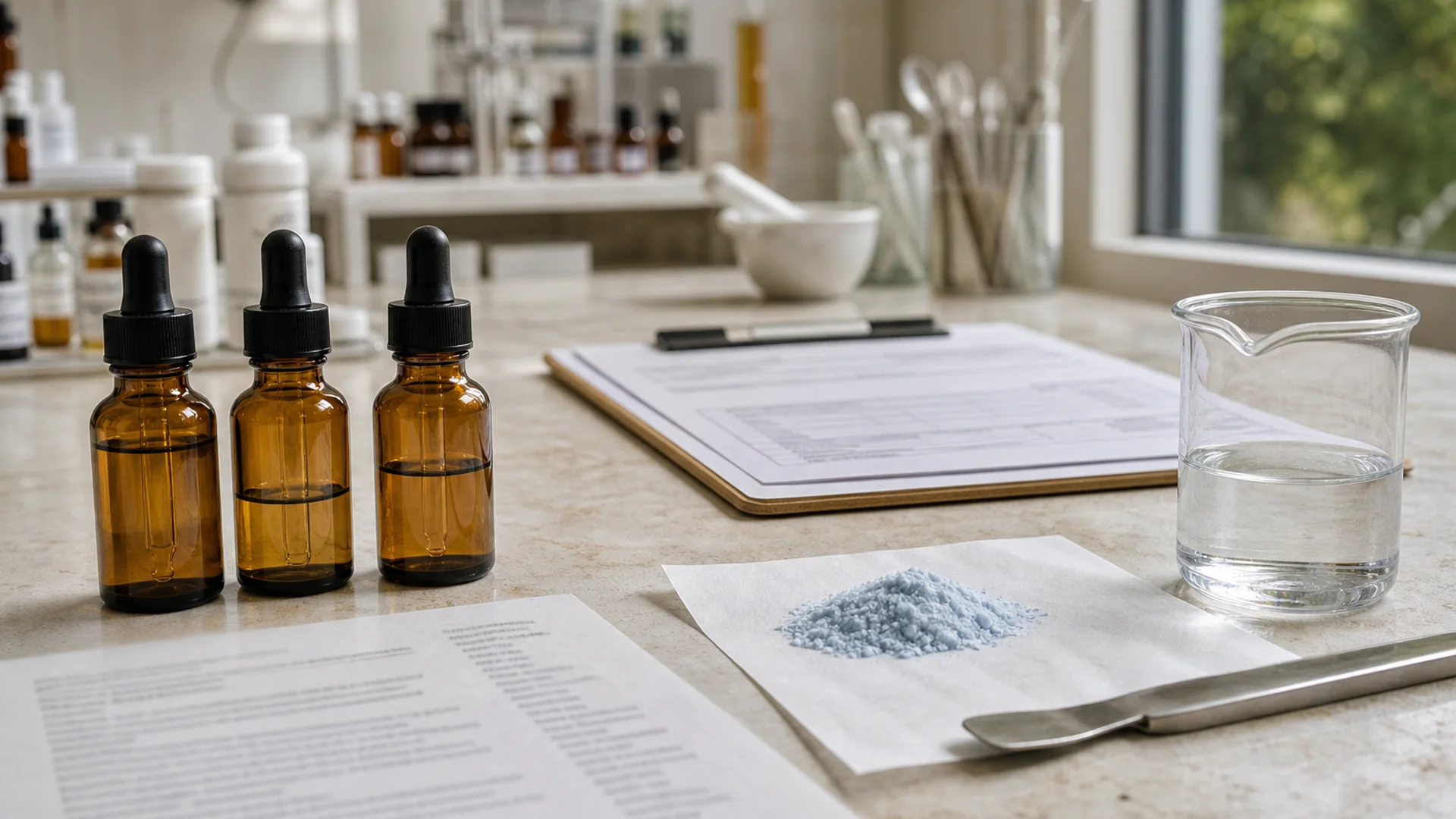
A 1% peptide claim is not a quantitative assay — start with the raw-material file
Why INCI position, a marketed “X% solution,” and serum colour cannot tell you how much peptide is active. What a COA/TDS can establish — and what they cannot.
 Peptide serums
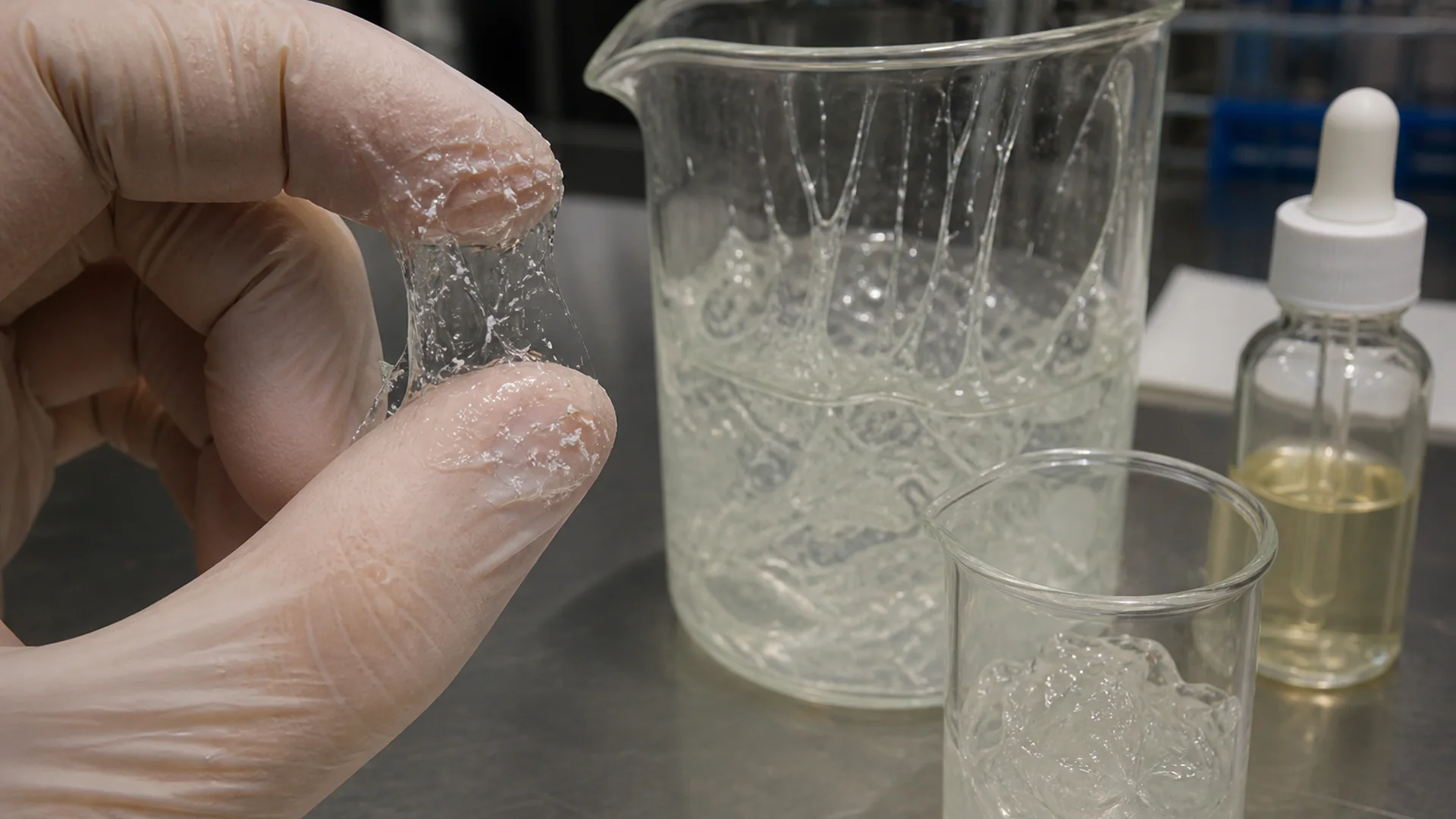
When a peptide serum pills, rolls or turns tacky, start with the chassis — not the sequence name
Separate chassis rheology failure from routine-layer pilling. Diagnose polymer load, electrolytes from peptide solutions, humectant tack and application amount — without blaming the sequence by default.
 Peptide serums
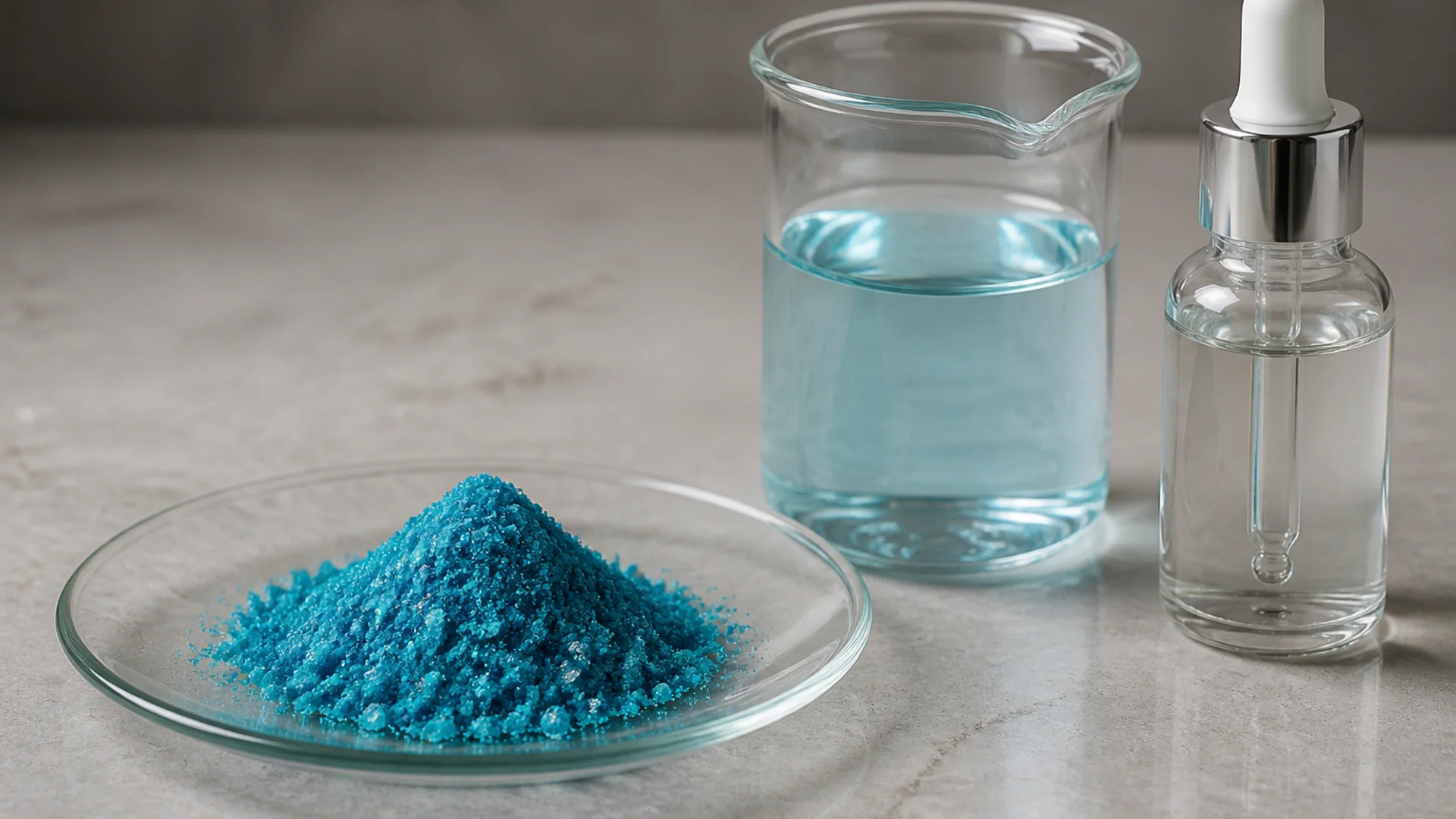
Blue GHK-Cu can be consistent with the Cu(II) complex — it still cannot prove concentration
Blue or blue-green can match a Cu(II) complex specification, but visual intensity is not purity or dose. Separate powder, solution and finished serum; treat a colour shift as a signal, not an assay.
 Peptide serums
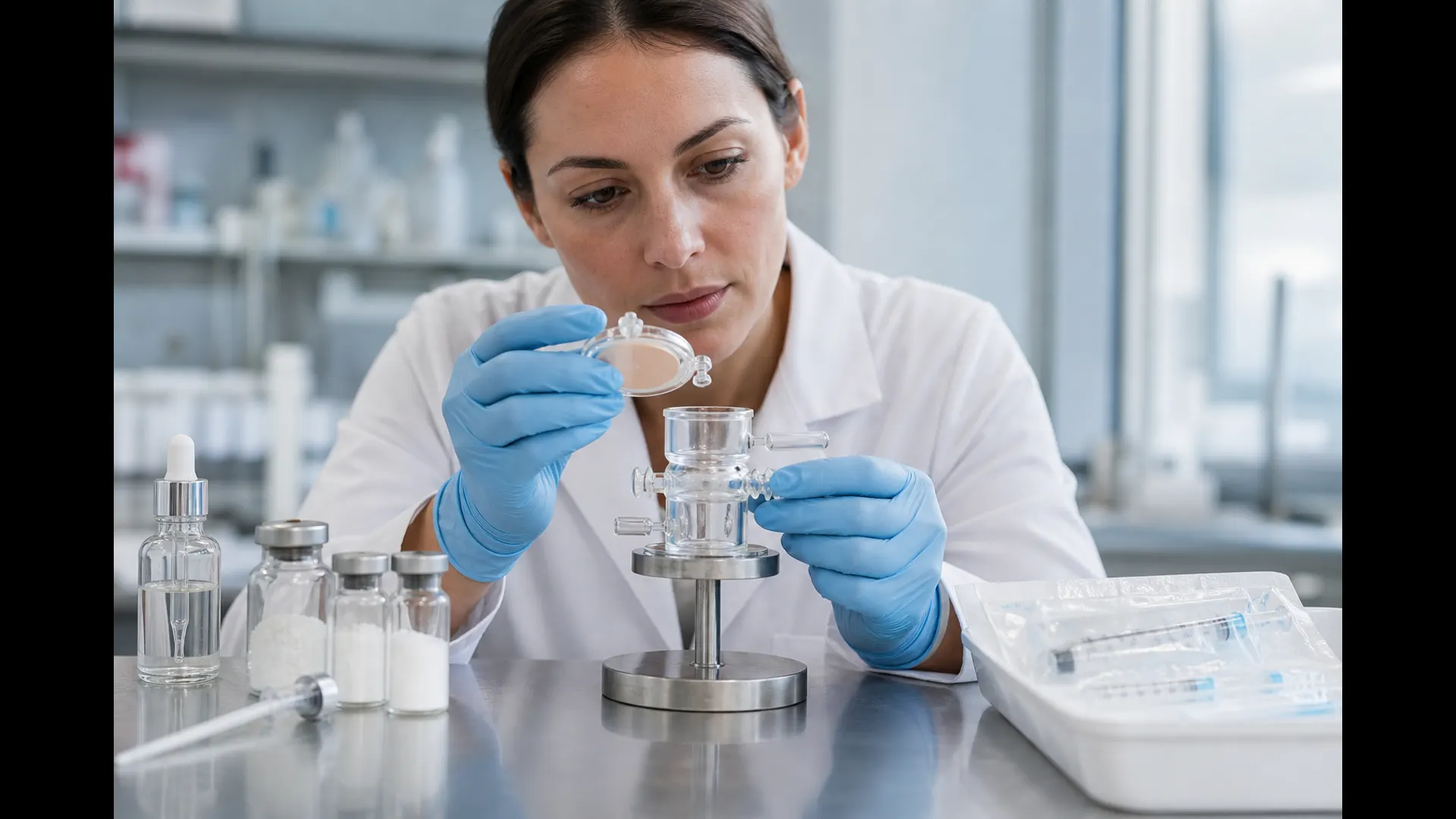
Topical Argireline and SYN-AKE are not botulinum toxin — here is what the evidence actually supports
Separate cosmetic evidence from “topical Botox” marketing: Acetyl Hexapeptide-8 and SYN-AKE are not botulinum toxin, penetration is formulation-dependent, and expectations should stay cosmetic.
 Peptide serums
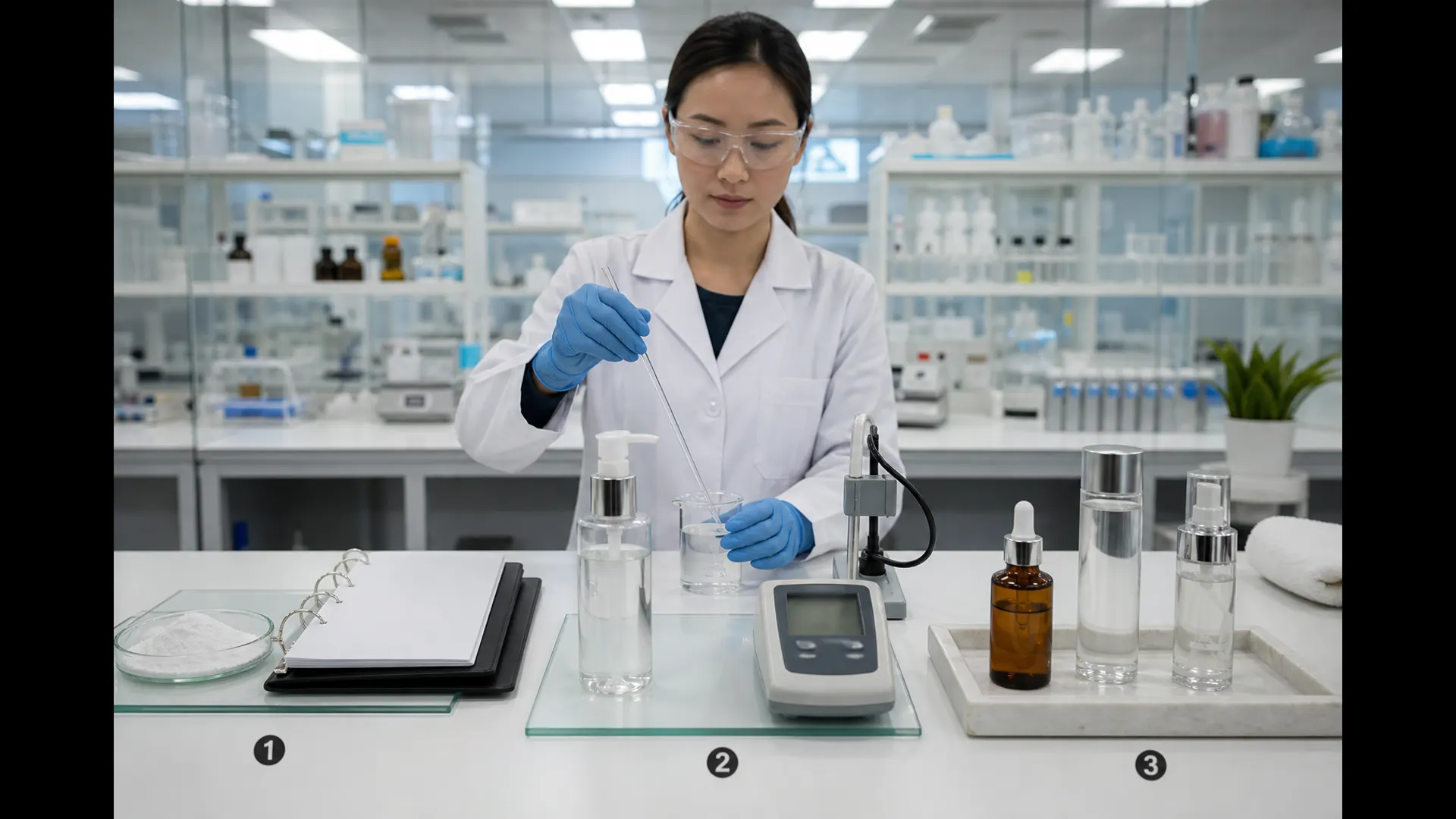
Acids and vitamin C do not universally “denature” peptides — three questions to ask instead
Reject the blanket rule that pH below 4 always denatures peptides. Separate raw-material stability, finished-product compatibility, and consumer layering — peptide by peptide, TDS by TDS.
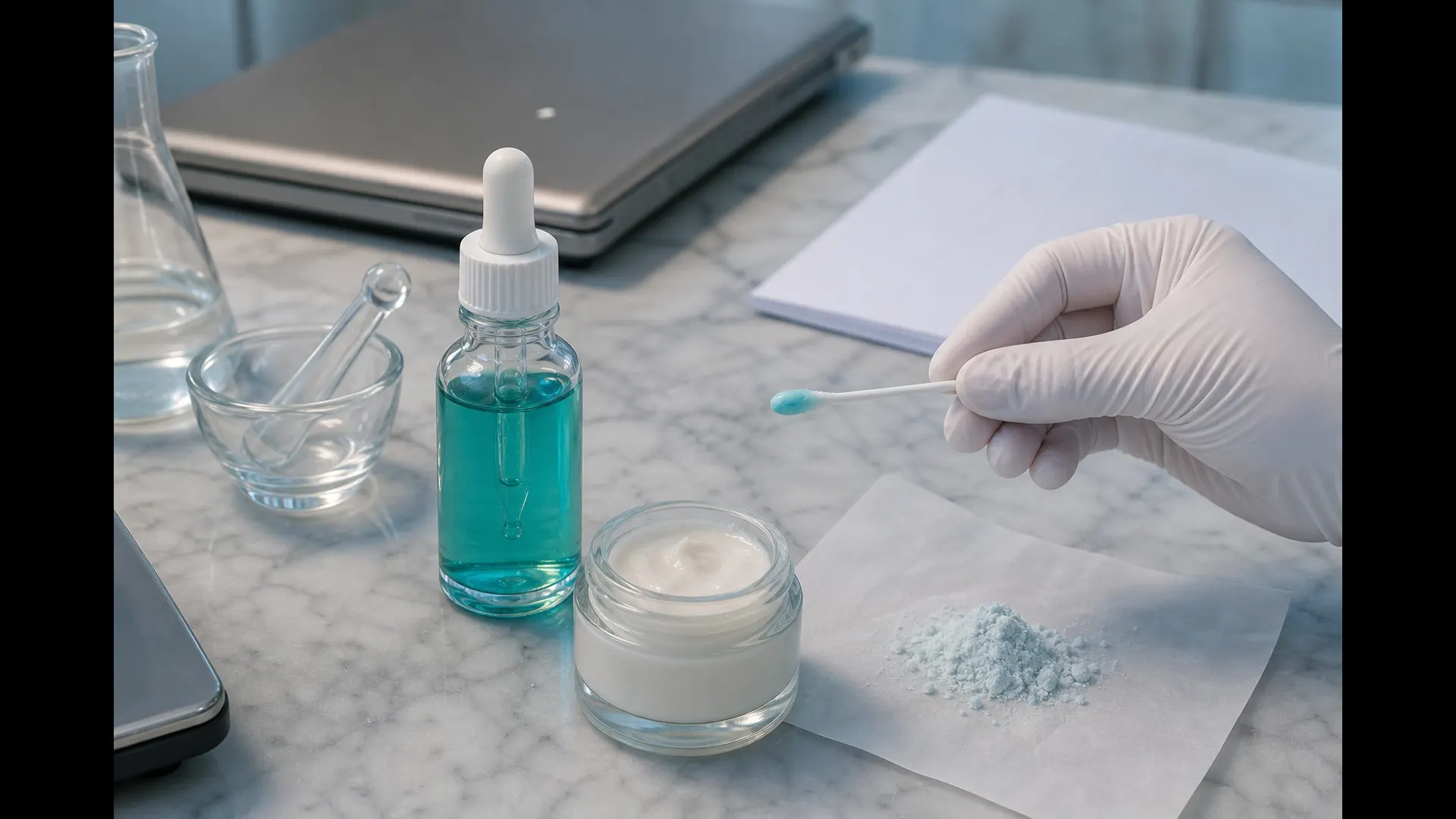 Peptide serums
“Copper uglies” is an internet phrase, not a proven topical GHK-Cu syndrome
Treat “copper uglies” as a 2026 internet phrase, not a proven clinical syndrome. Separate topical GHK-Cu cosmetics from injectable anecdotes; look at vehicle, irritation, acne, and when to stop.
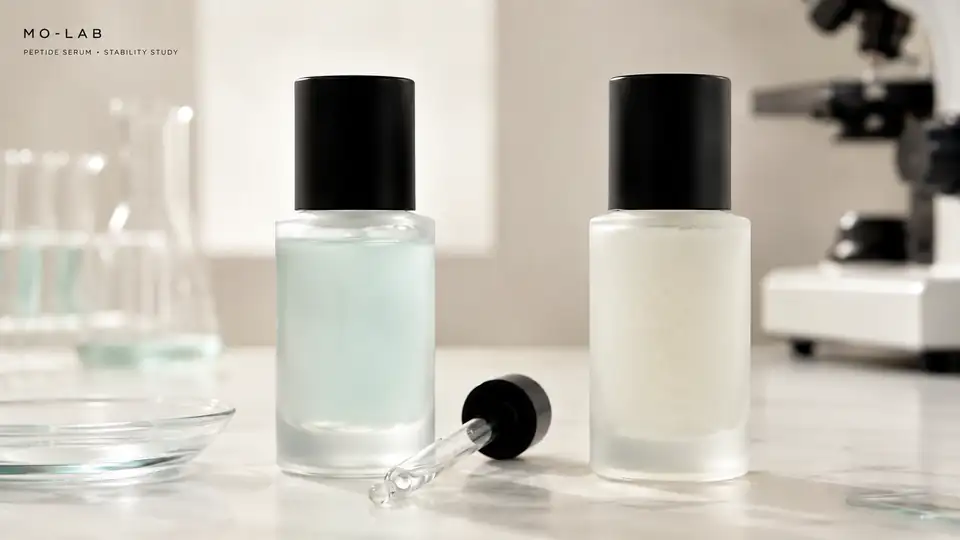 Peptide serums
Why peptide serums fail: the formula problems that start before the peptide goes in
A practical formulation diagnostic for cloudy, unstable or underperforming peptide serums: process order, pH drift, preservation, raw-material carriers and compatibility.