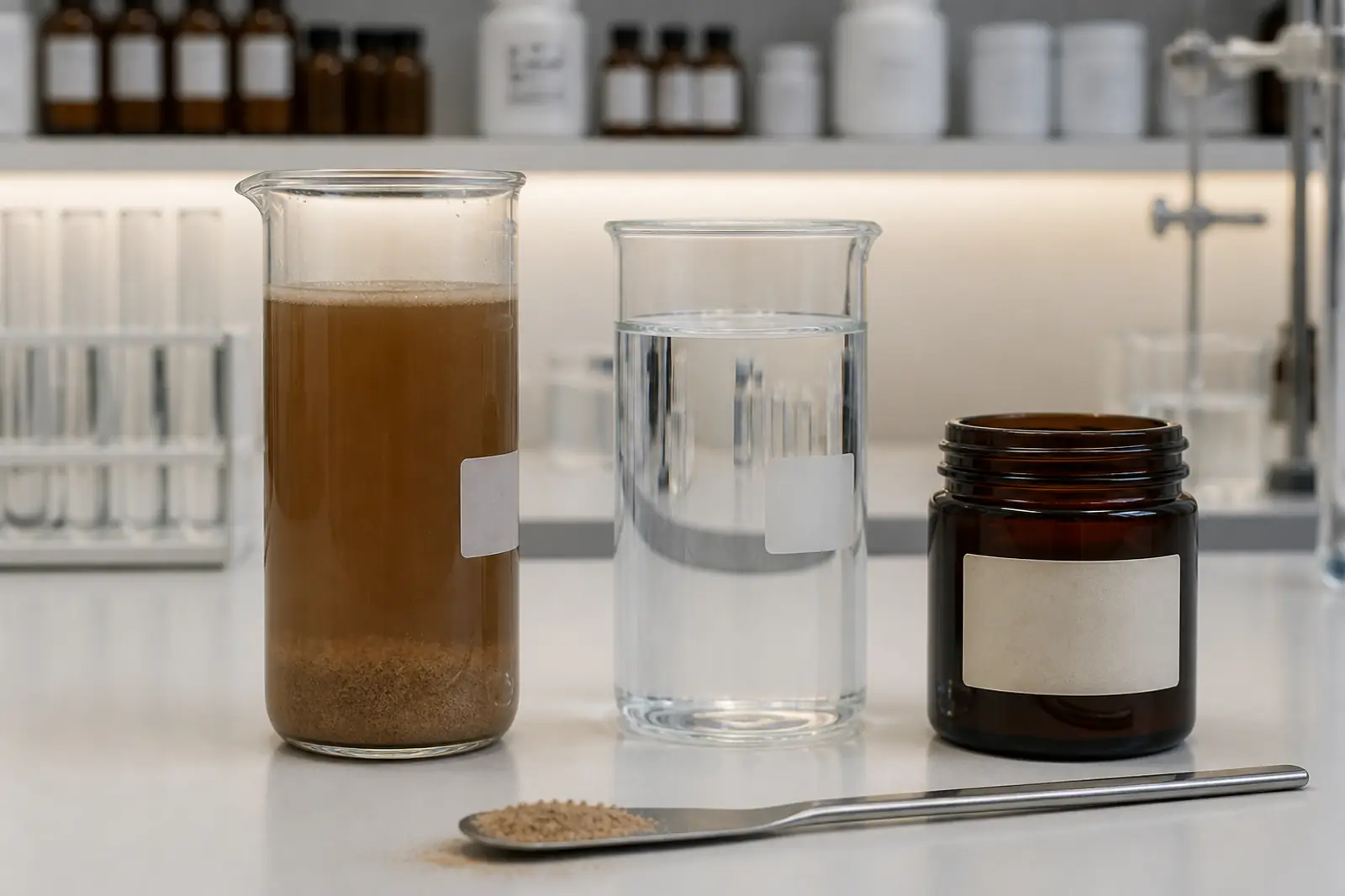
1. “Glycolic extract” can describe the extraction vehicle
The botanical extracts hub contains several extraction families. A glycol or glycol-water carrier can be part of how plant material is delivered; that wording alone does not identify glycolic acid as the active ingredient.
2. Read the full INCI before you design the chassis
The glycolic and hydroalcoholic extracts category is a better starting point than a keyword guess. Record the named plant, solvents, preservatives and appearance. Those facts affect compatibility and water balance more than the marketing shorthand.
3. Do not borrow the workflow for a dry powder
A dry extract has different weighing, dissolution and carrier questions. The comparison notes for CO2 versus dry extracts are useful precisely because extraction format changes the formulation job. Do not transfer a powder protocol to a liquid glycolic extract.
4. Keep claims tied to the supplied material
Do not advertise exfoliation merely because the supplier or search result uses the word glycolic. If glycolic acid is actually present, its concentration and finished-product context require their own assessment. If it is a botanical glycol extract, describe the documented botanical material instead.