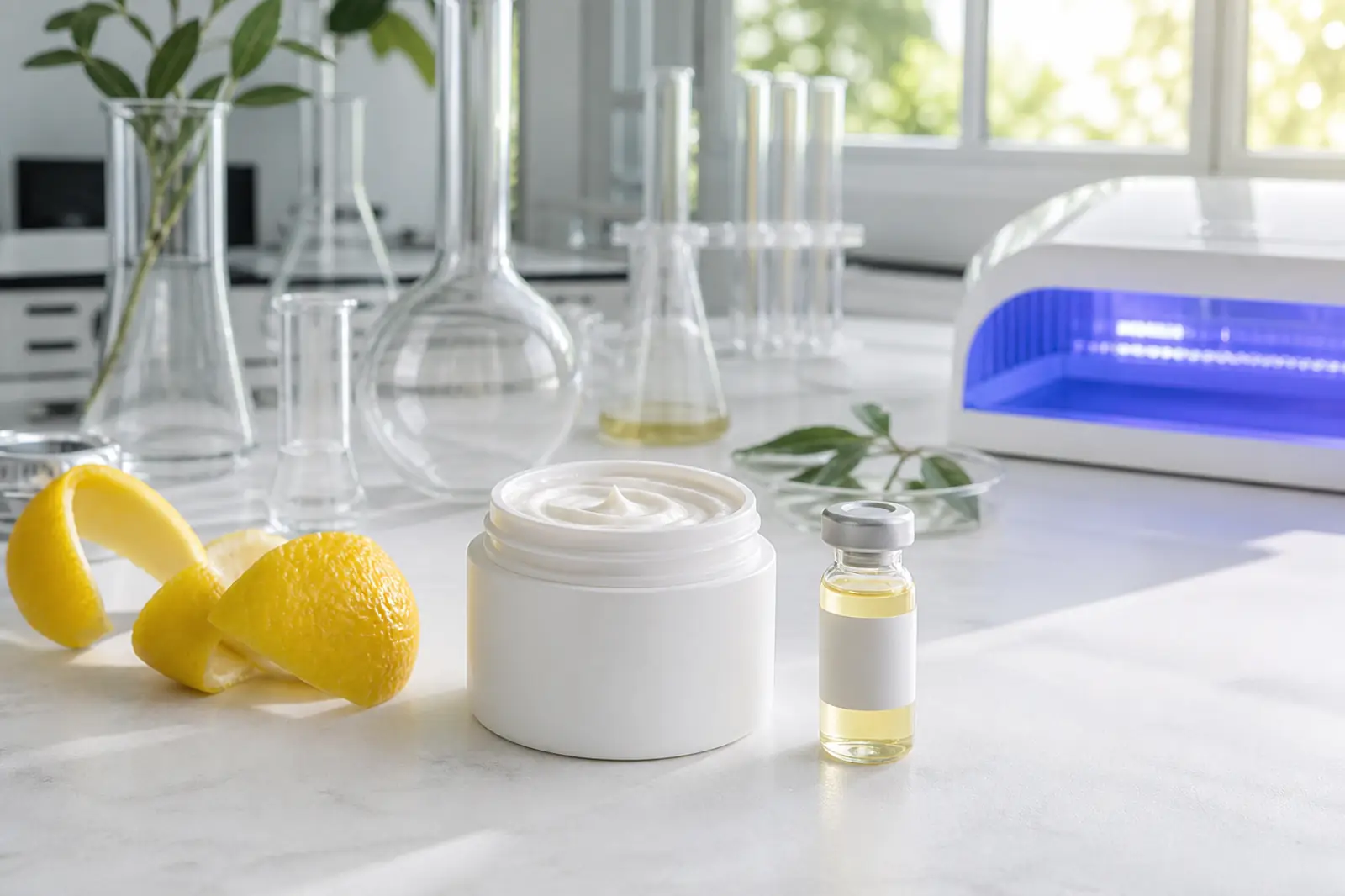
1. Phototoxicity here means a documented photoirritation risk
In cosmetic safety language, phototoxic citrus oils are a class of expressed peel oils associated with furocoumarins. That is not the same as ‘all citrus smells burn in the sun,’ and it is not a diagnosis of photocontact allergy for every user. It is a reason to open the IFRA category and the GC profile before you put the oil in a daytime leave-on. Browse citrus essential oils as named botanicals with a process (expressed versus distilled), not as a single ‘orange family’ flavor.
2. Lemon peel oil is a teaching lot — still not a number from this page
A lemon essential oil sold as a 10 ml cosmetic pack is typically associated with Citrus limon peel. Expressed lemon oil is one of the citrus materials IFRA treats with care in leave-on. Distilled lemon is a different commercial object if the file actually says distilled. Do not assume the bottle in front of you is the low-furocoumarin grade because the label is pretty. Do not copy a maximum from a forum into this lot. If the COA is silent on process, you do not have a phototoxicity conclusion — you have a purchasing question.
What buyers say
Buyer experience with this exact Mylo-Opt product. Educational content stays primary — this is not scientific proof.
Open the exact product page — Lemon essential oil 10 mlI add lemon essential oil to my hair rinse.
Open the exact product page — Lemon essential oil 10 mlI love the lemon smell — I drop the essential oil into soap, creams, and shampoos.
Open the exact product page — Lemon essential oil 10 mlI'd point people with really split ends toward lemon essential oil — after a while the ends look more put together.
Open the exact product page — Lemon essential oil 10 mlBought lemon essential oil and I didn't expect to like the smell this much.
Open the exact product page — Lemon essential oil 10 mlI buy lemon essential oil pretty often and add it to my hair rinse.
Open the exact product page — Sweet orange essential oil 10 mlSmells like fresh orange. From the texture you can tell it's made from natural ingredients. You just can't tell the exact percentage mix.
Open the exact product page — Sweet orange essential oil 10 mlFinally found the smell of a freshly peeled orange! Super!!! I'd buy it again.
Open the exact product page — Sweet orange essential oil 10 mlOrange oil is really fragrant and feels right on the nose right before New Year.
3. Sweet orange is not a free pass
Sweet-orange essential oil is often marketed as friendlier than bergamot. Bergamot was not verified as a live SKU in this inventory pass, so this article will not invent that URL. Sweet orange still needs its own file: expressed versus distilled, IFRA category, and whether the brief is a rinse-off soap or a face oil worn outdoors. ‘It is not bergamot’ is not a risk assessment. If the only reason it is in a day cream is the smell of cleaning products, rewrite the brief.
4. Day cream, body oil in sun, and rinse-off are different exposures
A wash-off cleanser with a citrus note is not the same leave-on category as a face cream worn under daylight. A body oil used at the beach is closer to the leave-on problem than a night anhydrous balm that is washed off in the morning — and even then, IFRA still applies. Do not hide a citrus EO in a ‘day moisturiser’ because the emulsifier is elegant. The leave-on oil phase is where the exposure lives.
5. Architecture will not cancel furocoumarins
A competent day-cream emulsifier system can hold a small oil load without splitting. That is stability, not phototoxicity clearance. Encapsulation marketing, ‘natural SPF’ folklore, and mixing the EO with a heavy ester do not replace the IFRA file. If you need daytime scent, look for a grade and a category the file actually supports — or use a fragrance compound designed for that category. Do not ask lemon peel to double as a sun story.
6. What to tell a shopper without scaring them into folklore
Say: some citrus peel oils are restricted in leave-on products worn in daylight; check the product type and the oil’s process grade; do not apply a citrus body oil and then seek intense sun as a ‘treatment.’ Do not say: this oil tans, this oil is always unsafe, this oil replaces sunscreen. Phototoxicity guidance is conservative formulation, not a medical protocol.
7. A brief that survives legal and TDS review
Product type (leave-on face / body / rinse-off). Botanical and process. IFRA category reference from the supplier. No UV-therapy language. No invented percent. If the scent is non-negotiable for a day cream and the file cannot support it, change the scent — not the physics of sunlight.